
What changes the cost of a Level 2 installation?
The house sets part of the price: distance from the panel, the wire route, the garage and the permit. You set the rest. The amperage you choose decides the breaker, the wire gauge and how much panel capacity the charger uses. The charger you choose decides the hardware cost and whether the job needs extra parts such as a GFCI breaker or an energy meter.
House-side variables, national averages and permit fees are on our main EV charger installation cost page. For scale, Qmerit's cost guide (March 18, 2026) puts materials for a home Level 2 install, meaning conduit, wire and breaker, at $200 to $500. That is the line amperage moves. These are national averages, not a quote.
How does amperage change the cost?
Higher output needs a bigger breaker and thicker copper, and it takes a bigger share of your panel. A 32 amp charger runs on a 40 amp breaker and 8 AWG wire. A 48 amp charger needs a 60 amp breaker and 6 AWG copper in conduit, or 4 AWG if the run uses NM-B cable. Over a long run, that step adds up.
| Charger output | Breaker | Copper in conduit | NM-B cable | Counted in load calculation |
|---|---|---|---|---|
| 32 A | 40 A | 8 AWG | 8 AWG | 7,680 W |
| 40 A | 50 A | 8 AWG | 6 AWG | 9,600 W |
| 48 A | 60 A | 6 AWG | 4 AWG | 11,520 W |
Breakers at 125 percent of charger output (NEC 625.41 and 625.42). Wire from the NEC 310.16 ampacity table published by Cerrowire, with conduit sizes at 75°C terminations and NM-B limited to its 60°C rating. Tesla's Universal Wall Connector manual matches the 48 amp row. Load figures use NEC 220.57 (2023): the larger of 7,200 W or nameplate.
Going from 32 to 40 amps changes nothing in conduit but moves NM-B cable up a size. Going to 48 amps moves both. Copper prices move with the market, so the gauge on your quote is what tells you which row you are paying for. The full sizing logic is in what size breaker for an EV charger.
The hidden cost: panel capacity
The bigger cost of high amperage is often not the wire. A 48 amp charger counts as 11,520 watts in the load calculation, against 7,680 for a 32 amp charger. That gap can be the difference between a charger that fits your existing service and one that needs load management or an upgrade. See EV charger panel upgrade cost before you choose the bigger number.
When 48 amps buys nothing
The car's onboard charger caps the rate. Tesla's home charging support page, for example, lists Model 3 and Model Y Rear-Wheel Drive at 32 amps maximum and says a Wall Connector on a 40 amp breaker gives the same result. Check your model in our vehicle charging guides and compare speeds on 40 amp vs 48 amp EV chargers.
Wire now, set lower
If a second EV or a bigger truck is likely, wire sized for 60 amps with the charger set lower can cost less than pulling new wire later. Under NEC 625.42, a charger with an adjustable setting is counted in the load calculation at the setting marked on it, so the bigger wire does not have to cost panel capacity today.
How does the charger you choose change the cost?
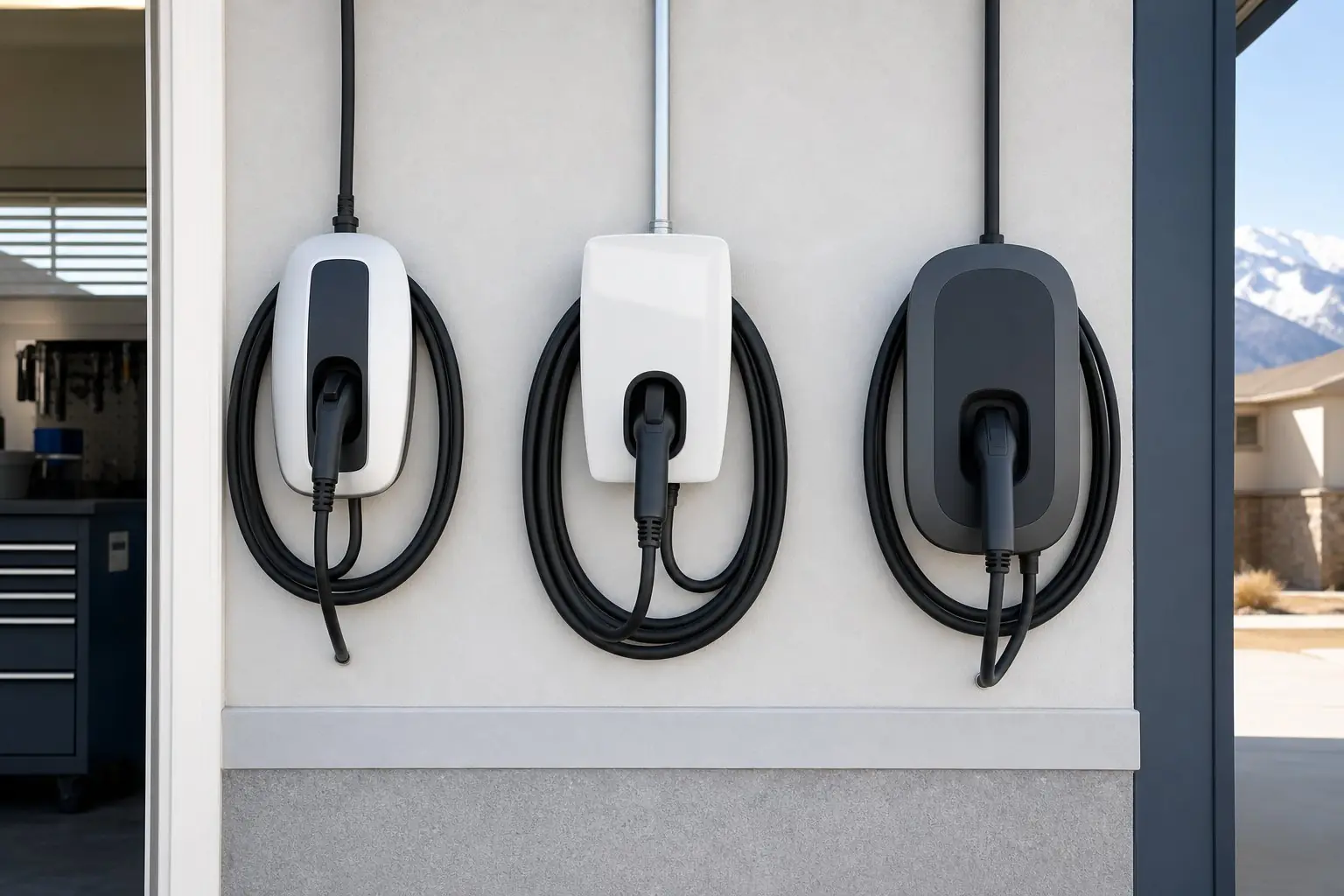
Through the hardware price and through what the charger asks of the install. Qmerit puts residential Level 2 chargers at $300 to almost $2,000. A plug-in unit adds a GFCI breaker and receptacle. Load management and power sharing add a meter or extra setup. Cable length and Wi-Fi decide where the charger can hang, which sets the length of the run.
| Charger choice | What it changes on the install |
|---|---|
| Hardwired | Standard two-pole breaker, no receptacle. Reaches 48 amps. |
| Plug-in (NEMA 14-50) | Two-pole GFCI breaker and an EV-grade receptacle. Charging tops out at 40 amps. See NEMA 14-50 installation cost. |
| Smart, Wi-Fi connected | Higher hardware price. A detached garage may need the network extended. |
| With load management | Current sensors in or beside the panel, wired in under the permit. Emporia, for example, bundles its charger with a Vue 3 monitor and two 200 amp sensors. |
| Power sharing for two cars | A second charger, each on its own branch circuit, sharing one limit set at commissioning. |
Hardware prices
National guides give wide ranges. Qmerit's breakdown lists Level 2 hardware at $300 to $900. HomeAdvisor (updated June 20, 2026) says smart features such as Wi-Fi can add $200 to $600 over a base model. For reference, two automaker chargers listed on their makers' stores on October 4, 2026: the Rivian Wall Charger at $800, and the GM PowerUp 2 at an $899 list price, with discounts running. Prices change, so check the store before you budget.
Cable length and mounting spot
Tesla's and Rivian's wall chargers come with a 24 foot cable. A shorter cable can push the charger closer to the car and farther from the panel, which lengthens the run.
Who supplies the charger
Some installers include the charger and some expect you to bring it, which is why totals are hard to compare. If you already own a charger, tell us the model and we can quote the installation around it. More on choosing hardware is on home EV chargers.
What should a Level 2 quote spell out?
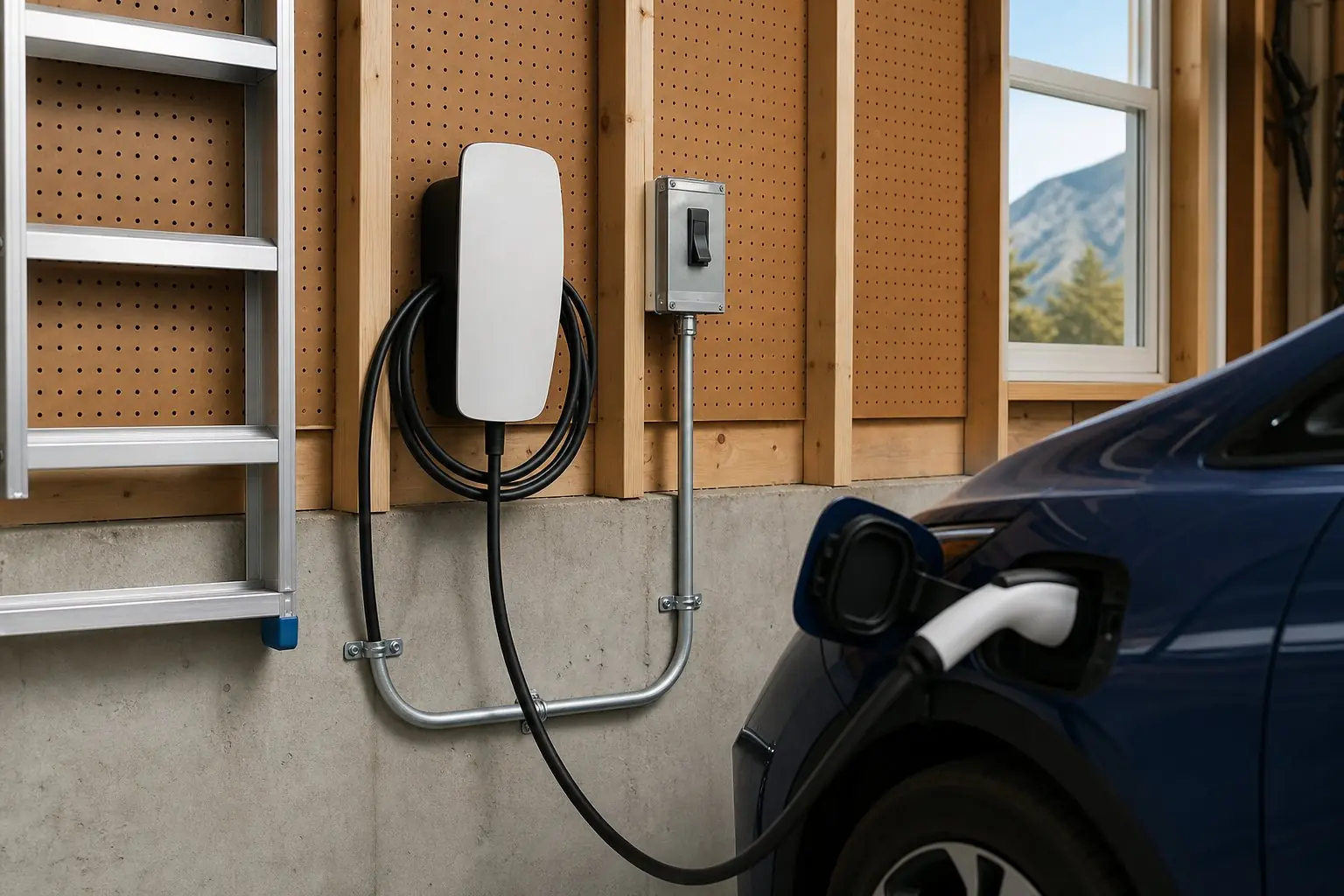
The charger model and its amperage setting, the breaker size, the wire gauge and type, and whether the charger is included. If the wire is sized above the setting for future use, the quote should say so. If load management or power sharing is part of the plan, the meter and setup should be listed.
- Charger model, and whether it is included in the price
- Charger output setting and breaker size (for example 48 A on 60 A)
- Wire gauge, type and route, and whether it is sized for a higher future setting
- Hardwired or NEMA 14-50, and a GFCI breaker if it is an outlet
- Load calculation result, and any load management hardware
- Commissioning, Wi-Fi setup and power sharing, where they apply
Our quotes list the charger, materials, labor, permit and any panel work as separate lines. Speeds, setups and Level 1 versus Level 2 are covered on Level 2 charger installation and Level 1 vs Level 2 charging.
Level 2 installation cost questions
Does a 48 amp charger cost more to install than a 32 amp one?
Usually, because the circuit is bigger. A 48 amp charger needs a 60 amp breaker and 6 AWG copper in conduit or 4 AWG NM-B cable, against 8 AWG for a 32 amp charger on a 40 amp breaker. It also counts for more in the load calculation, which can decide whether the panel needs work.
Is a 48 amp charger worth it if my car accepts only 32 amps?
Not for speed. The car's onboard charger sets the ceiling, so a 48 amp unit charges a 32 amp car at 32 amps. Tesla, for example, lists Model 3 and Model Y Rear-Wheel Drive at 32 amps maximum on its home charging support page. Paying for 48 amps makes sense only if a future car will use it.
Do smart chargers cost more?
The hardware often does. HomeAdvisor's guide, updated June 20, 2026, says built-in smart features such as Wi-Fi can add $200 to $600 to a charger's price over a base model. Installation is similar, unless you add a load management meter or need Wi-Fi to reach a detached garage.
Is a plug-in Level 2 charger cheaper to install than a hardwired one?
Not automatically. A plug-in charger needs a NEMA 14-50 receptacle, which in Utah means a 50 amp two-pole GFCI breaker and an EV-grade receptacle, and it tops out at 40 amps of charging. A hardwired charger needs neither part. Compare both on the same quote.
Not sure which amperage to pay for? Your car model and a photo of your open panel are the best start.
Get a Level 2 installation quote