Commercial Charger Installation Cost
The one-time and ongoing costs of business charging, what Rocky Mountain Power's rebate covers, and how demand charges and the Utah charging tax fit in.

What actually sets the price of a charger install, and how to read the quotes you get.
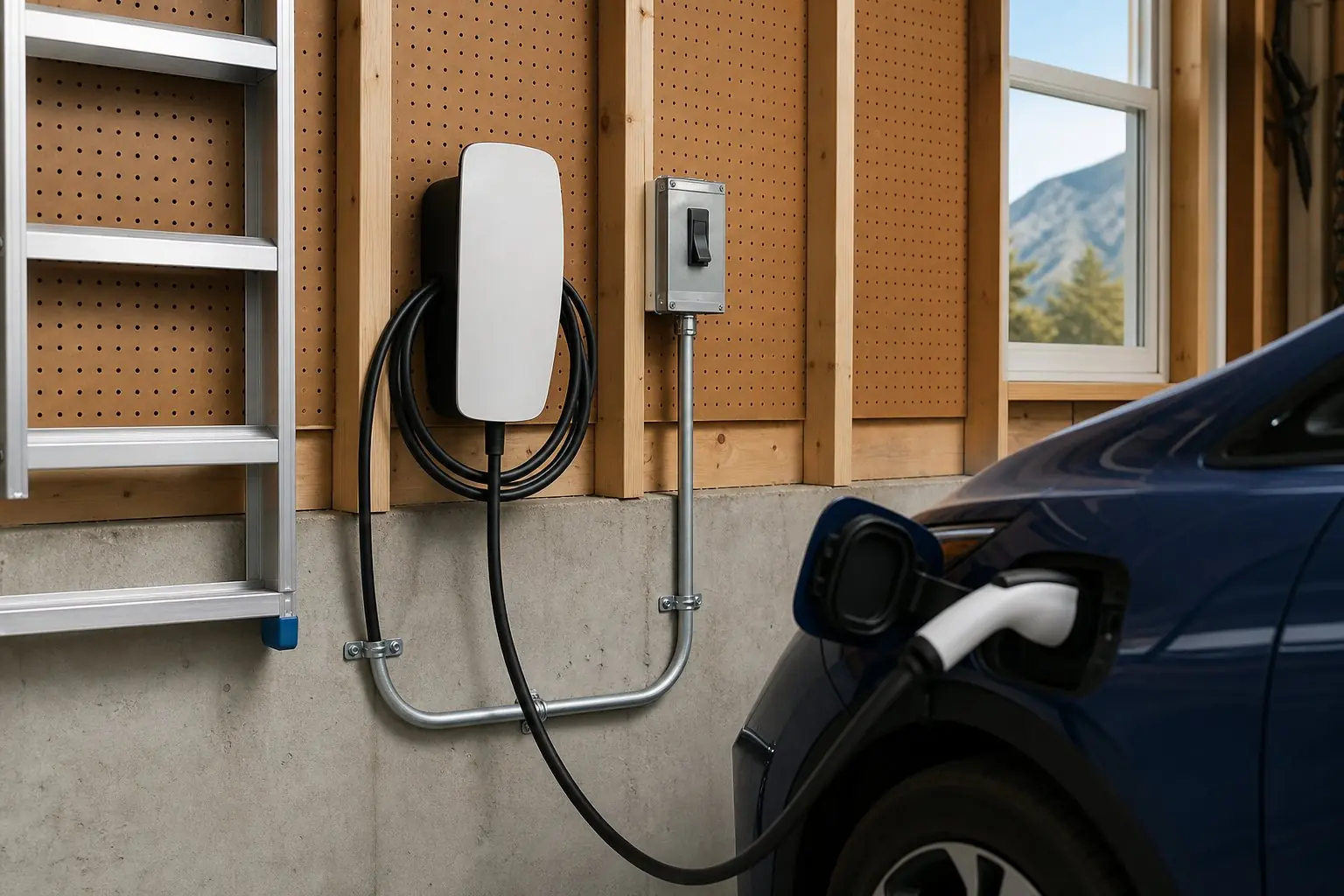
As a set of variables, not a single number. The distance from your panel, the panel's spare capacity, the charger's amperage, the wire route, the garage type and the permit decide most of the price. Whether the charger itself is included matters too: Qmerit's national breakdown (March 2026) puts charger hardware alone at $300 to $900.
Advertised prices for Level 2 installs in the Ogden area span a wide range, and some include the charger while others do not. National cost guides are useful as a frame, but they average jobs from across the country. Our guides name the cost drivers, cite dated national figures where they help, and never invent local prices.
Sizing questions behind the numbers are in the EV charging guide, starting with what size breaker an EV charger needs.
Ended Rocky Mountain Power's residential charger rebate was removed effective January 1, 2026, and the federal 30C credit does not apply to chargers placed in service after June 30, 2026. Rocky Mountain Power's commercial and multifamily charger incentives remain open, subject to available funds.
Each guide explains the variables for one type of job.
The one-time and ongoing costs of business charging, what Rocky Mountain Power's rebate covers, and how demand charges and the Utah charging tax fit in.
Why a rear or detached garage raises the price of a charger install: the trench, the wiring method, wire size over distance, and circuit versus subpanel.
The variables behind an installation price, dated national averages, local permit fee rules and a checklist for comparing quotes.
Why panel, subpanel and service upgrades are priced so differently, what Rocky Mountain Power adds to a service upgrade, and when load management is the cheaper answer.
How the amperage you choose and the charger you buy change the price of a Level 2 install, with dated national hardware ranges.
The parts that set the price of an EV charging outlet: GFCI breaker, receptacle grade, wire size, outdoor covers and future hardwiring.
The extra parts and labor behind a driveway, exterior-wall or pedestal charger, and which of them you can avoid.
What each Tesla home charging setup needs on the install, what Tesla says a quote should include, and where the cost differences come from.
Because two houses on the same street can need very different jobs. The distance from the panel, the panel's spare capacity, the charger's amperage, the wire route and the garage type decide the price. A number without those details would be a guess, so our guides explain the variables instead.
When it is needed, a panel or service upgrade. Without one, the length and difficulty of the wire run usually matter most, especially trenching to a detached garage. A load calculation shows whether an upgrade is really required, and load management can sometimes avoid it.
As a rough frame only. National guides survey jobs across the country, and some include the charger while others do not. Read them as averages, not quotes, and check which variables apply to your house.
Not for the charger itself. Rocky Mountain Power ended its residential charger rebate on January 1, 2026, and the federal 30C credit does not apply to chargers placed in service after June 30, 2026. Commercial, workplace and multifamily charger incentives from Rocky Mountain Power are still open, subject to available funds.
Want a number for your house? Start with your car model and a photo of your panel.
Get an installation quote