
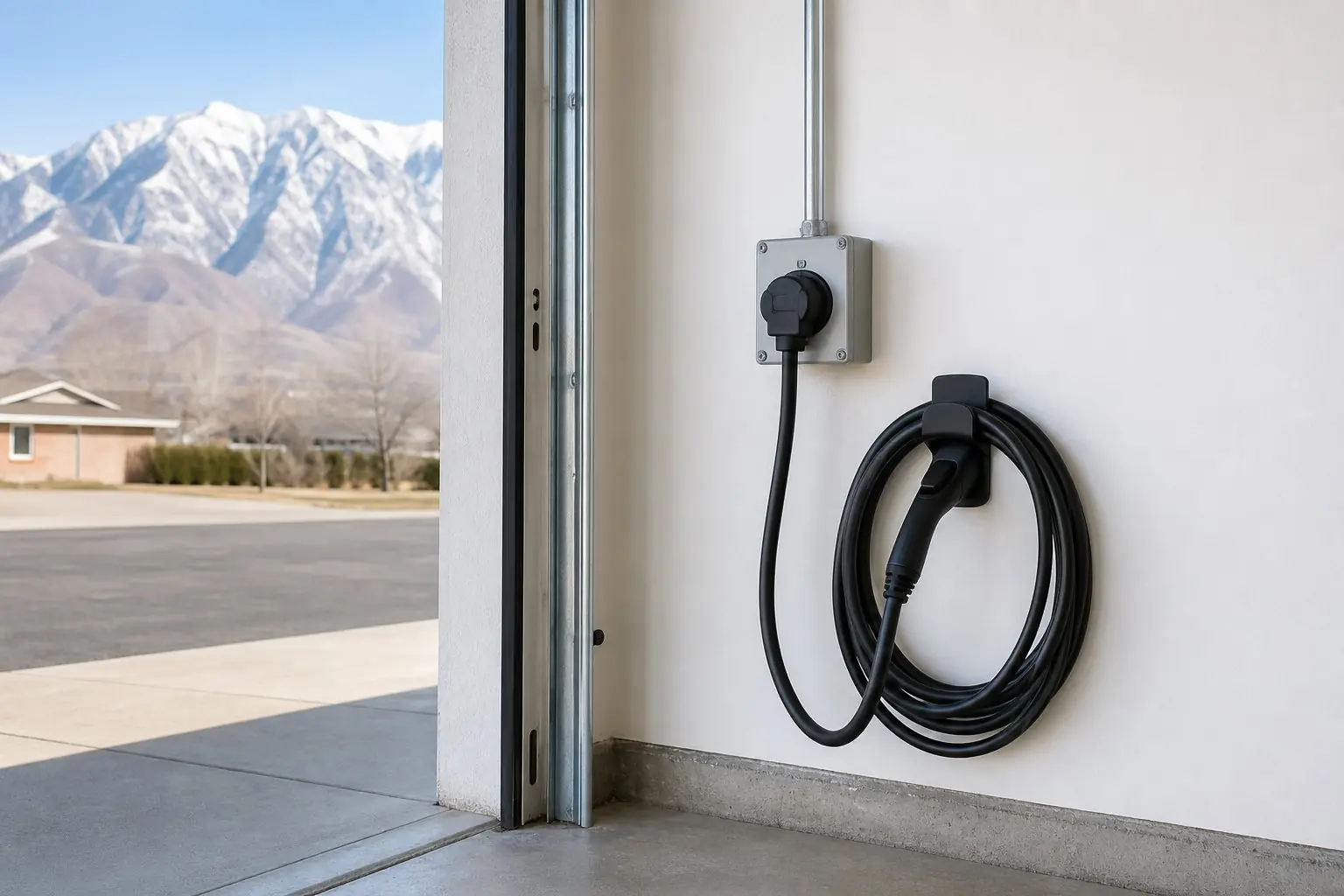
Safety first. If the plug, outlet, cable, charger or breaker is hot, discolored, melted, buzzing or smells like burning, stop charging and turn the breaker off. Do not open the panel, the outlet or the charger. Reset a tripped breaker once at most, and do not swap a GFCI breaker for a standard one on an outlet.
What does EV charger repair usually involve?
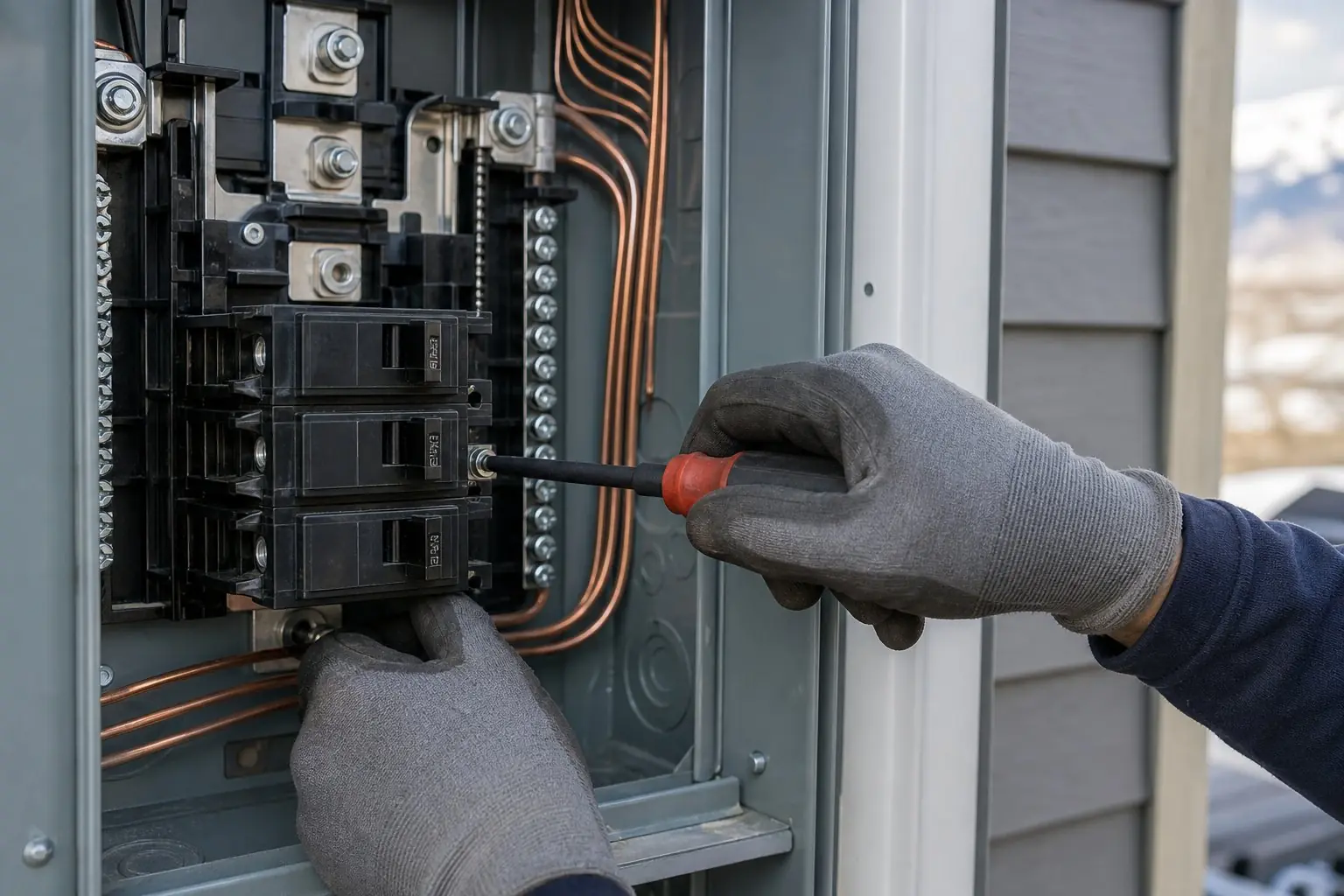
Most home charging failures are in one of three places: the charger, the receptacle and plug, or the circuit behind them, meaning the breaker, wire and connections. An electrician diagnoses which one, then repairs the circuit or receptacle side. Faults inside the charger go back to its maker.
That split matters for cost and for who you call. Tesla's Mobile Connector manual is explicit: "Do not attempt to open, disassemble, repair, tamper with, or modify the Mobile Connector. Contact Tesla for any repairs." Tesla's charging equipment warranty also excludes repairs or modifications "made by a person or facility not authorized or certified to do so." So the electrician's job is everything up to the charger's terminals, plus testing that tells you whether the charger itself is the problem.
Common symptoms each have a troubleshooting article you can read first:
- EV charger keeps tripping the breaker
- EV charger tripping a GFCI breaker
- NEMA 14-50 outlet getting hot
- EV charger not charging
- EV charger charging slowly
- EV charger won't connect to Wi-Fi
- Tesla Wall Connector flashing red
What does an electrician check?
Voltage at the charger or outlet, the ground and neutral connections, wire size against the breaker, terminal torque, the condition of the receptacle, whether the breaker type suits the setup, and whether the charger's amperage setting matches the breaker. Those cover most circuit-side failures.
- Voltage: Tesla's fault table asks an electrician to measure L1 to L2, L1 to ground and L2 to ground at the terminal block when a unit shows no lights or an overvoltage fault.
- Grounding: for ground-assurance faults Tesla says to check the wirebox terminals, panels and junction boxes, and the ground-to-neutral bond at the main panel.
- Wire and breaker match: EV charging is a continuous load, so the breaker must be at least 125 percent of the charger's output and the wire rated for the breaker.
- Torque and heat: Hubbell warns that under-torqued terminals cause "arcing, overheating, and potential electrical fires." Tesla's high-temperature fault sends the electrician to check conductor size and terminal torque.
- The receptacle: a loose, worn or discolored 14-50 gets replaced, ideally with an EV-rated device such as Leviton's 1450R, built for "extended charge time and high frequency of insertions."
- Breaker type: a GFCI breaker plus a charger's built-in protection can cause nuisance trips, per ChargePoint and Emporia. On a receptacle the GFCI stays, because NEC 625.54 requires it; hardwiring is the usual fix.
- The breaker itself: a breaker that trips below its rating gets replaced. ChargePoint's installer guidance: "Only use new circuit breakers."
Is it a circuit repair or a warranty claim?
Read the charger's fault code first. Tesla's Wall Connector manual is a good example because it says who acts on each code. Power, grounding, voltage and heat faults go to an electrician. A solid red internal fault that survives a breaker reset goes to Tesla, and a vehicle overcurrent fault goes to the vehicle maker.
| Tesla Wall Connector light | Meaning | Who acts, per Tesla |
|---|---|---|
| No lights | Power supply issue | Electrician confirms voltage at the terminal block |
| Solid red | Internal fault | Breaker off 5 seconds and on; if it stays, contact Tesla |
| 1 red blink | Ground fault | Inspect cable and port for damage or water; electrician checks wiring |
| 2 red blinks | High ground resistance | Electrician checks ground connections and bond |
| 3 red blinks | High temperature | Update firmware; electrician checks wire size and torque |
| 6 red blinks | Overvoltage or poor grid quality | Electrician measures voltage |
| 7 red blinks | Vehicle overcurrent | Reduce car's charge current; contact Tesla or the car's maker |
Summarized from the fault code table in Tesla's current Gen 3 Wall Connector manual. Other brands use their own codes; check your charger's manual or app.
Tesla's charging equipment warranty covers "the refund, repair or replacement necessary to remedy any manufacturing defects," for 48 months of normal personal use on a Wall Connector and 12 months on a Mobile Connector, counted from the invoice date. It excludes damage from improper installation. Before calling Tesla, the manual asks for a short video of the lights, a photo of the part and serial number label, when it happened and your VIN. Other makers have their own terms, so read yours before anyone opens the unit.
What can you check before calling?
A few checks are safe without opening anything. Note when the problem happens: right at plug-in, or after an hour or more of charging. Look at the breaker for a test button, which marks a GFCI type. Compare the charger's amperage setting in its app with the number on the breaker handle. Look at the plug and outlet for discoloration or a loose fit without touching anything inside. Write down the fault light or app code. Anything beyond that, including removing a cover plate or swapping a breaker, is electrician work. The full list is on EV charger keeps tripping the breaker.
What if the charger's company stopped supporting it?
A charger whose maker has exited the market may still charge safely as a basic unit, without its app or scheduling. If it has failed, there may be no one to honor a warranty, and the practical fix is a new charger on the existing circuit when the ratings match.
Check your charger's current support status with its maker. Moving to a new charger is covered on EV charger replacement.
Does a charger repair need a permit?
Ogden City lists electrical permits as required to "Alter, Change, Extend, Install, Repair, Replace" an electrical system. Replacing a damaged receptacle, breaker or run of wire fits that list. Whether your repair needs one depends on what gets replaced.
When a repair needs a permit, we apply for it and schedule the inspection. When you request a quote, include the charger model, how it is connected, the fault code and a photo of the outlet or charger, so the visit starts with the right parts.
EV charger repair questions
Is it the charger or the circuit?
Start with the charger's fault light or app code, which often says which side to check. Power, ground, voltage and heat faults point to the circuit, the breaker or the connections, which an electrician tests. Internal faults that survive a breaker reset, or a damaged cable, point to the charger and its maker's support.
Can an electrician repair the charger itself?
Usually not inside the unit. Tesla's Mobile Connector manual says not to open, disassemble or repair it and to contact Tesla for repairs, and Tesla's warranty excludes repairs made by a person not authorized or certified to do them. An electrician repairs the circuit, receptacle and connections, and removes or reinstalls a hardwired charger when the maker replaces it.
My charger's company stopped supporting it. Is that a repair?
Usually it is a replacement. If the charger still delivers power safely, it may keep working as a basic charger without its app features. If it has failed and the maker cannot replace it, a new charger can often go on the existing circuit when the ratings match.
Does repair work need a permit in Ogden?
Ogden City lists electrical permits as required to alter, change, extend, install, repair or replace an electrical system. Replacing a receptacle, breaker or circuit section falls under that wording, so a permit may apply depending on what gets replaced.
Charger acting up? Tell us the model, the fault and how it is wired, and send a photo of the outlet or charger.
Request a charger repair quote