40 Amp vs 48 Amp Charger
Breaker, wire and panel load for 40 and 48 amps, which cars can use the extra 8 amps, and when 40 is the smarter choice.

Side-by-side looks at chargers, circuit sizes and charging options, built from manufacturer documents and the electrical code.
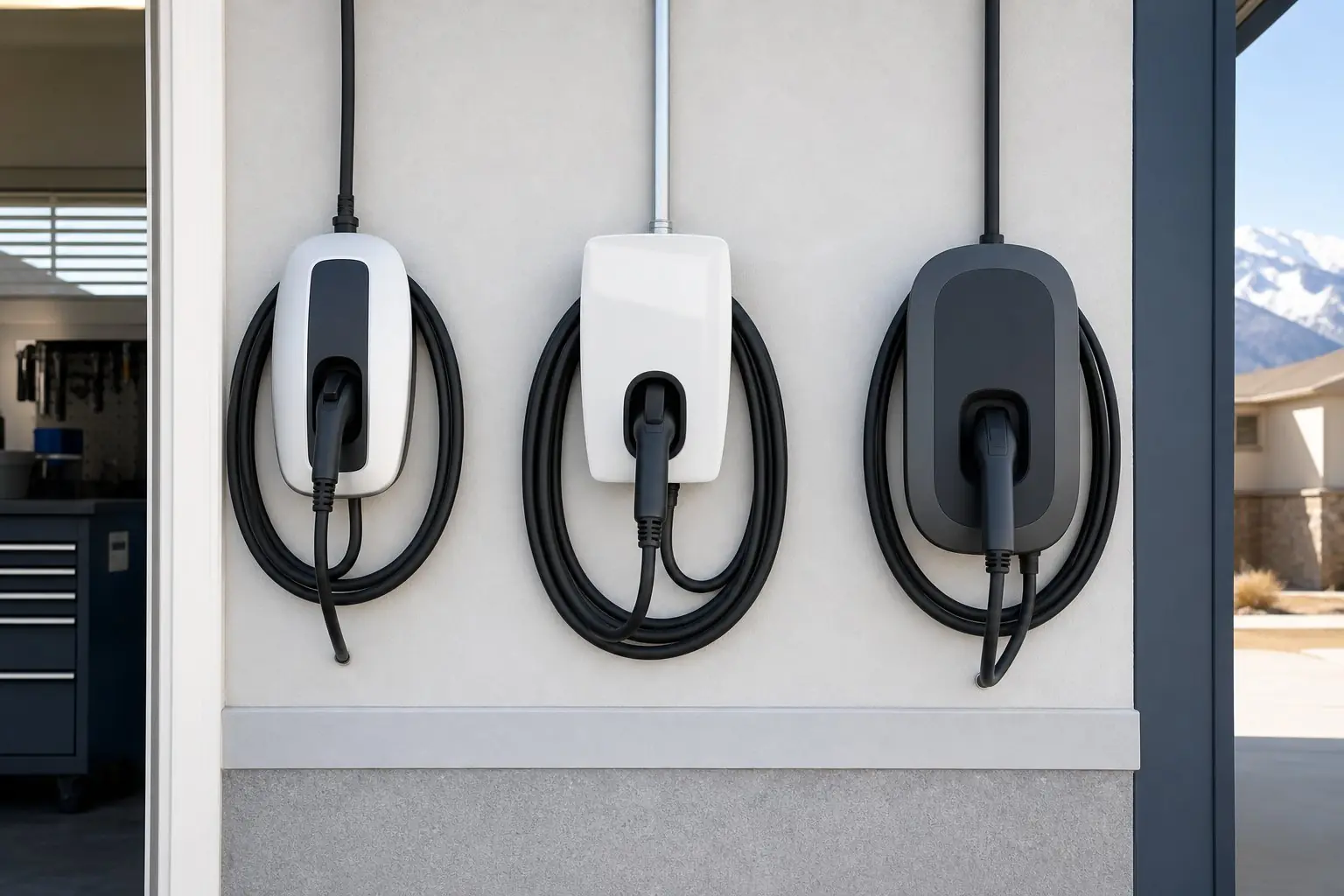
We compare on facts you can check: output in amps, the breaker and wire each option needs, connector type, enclosure rating, hardwired or plug-in, and what the code requires. Every figure comes from a manufacturer manual, datasheet or code reference, with the date we checked it. We do not force a winner when the honest answer is "it depends."
Most comparisons on other sites end with a single pick. In a real garage, the better option depends on three things: what your car's onboard charger accepts, what your panel can spare, and where the charger will hang. A 48 amp charger is no faster than a 40 amp one on a car that tops out at 32 amps. A plug-in charger that suits an indoor garage in South Ogden may be the wrong call for a driveway in Eden.
So each comparison ends with "choose this if" lists rather than a trophy. Where a manufacturer does not publish a spec, the page says so. Prices are left out because they change often; our EV charger cost guides explain what drives an installation price instead.
We are building comparisons for the common choices in a home charging project: how to connect the charger, how many amps to install, which wall unit to buy, and whether home charging is worth it. The list below shows the full set, and the cards further down show the ones already published.
For a model-by-model spec table, see home EV chargers. If something is not working on a charger you already own, start with EV charger troubleshooting.
Each page lists its sources and the date they were checked.
Breaker, wire and panel load for 40 and 48 amps, which cars can use the extra 8 amps, and when 40 is the smarter choice.
ChargePoint Home Flex vs Emporia Pro and Classic: output, breaker steps, plug-in options, enclosure, Wi-Fi and whole-home load management.
Charging speed, Utah's GFCI rule, outlet wear, outdoor use and portability, side by side, with manufacturer citations.
Per-kWh prices from Rocky Mountain Power's home and public-charger tariffs, a worked example, and when public charging still makes sense.
How far Level 1 gets you overnight, the driving patterns it suits, and when a 240-volt Level 2 circuit is worth installing.
Automaker-branded chargers against third-party brands on connector fit, app setup, power sharing and warranty, from manufacturer documents.
Output, plug-in options, connectors, wiring and warranty for Tesla's Wall Connectors and the ChargePoint Home Flex, side by side from manufacturer documents.
Output, plug-in options, temperature ratings, size, load management and warranty for Tesla's Wall Connectors and the Wallbox Pulsar Plus.
When the Universal Wall Connector's J1772 adapter is worth having over a Gen 3 Wall Connector, by car and garage, from Tesla's manuals.
There is no single best charger. The right one has a connector that fits your car, an output your car's onboard charger can use, a circuit your panel can support, and an enclosure rated for where it hangs. Our comparisons lay out those facts so you can match them to your own garage, car and budget.
From manufacturer installation manuals, datasheets and support pages, plus electrical code references such as NEC Article 625 and Utah's code amendments. Each page lists its sources with the date we checked them. Where a manufacturer does not publish a spec, the page says so instead of guessing or filling the gap with a typical number.
Charger prices change often and vary by retailer, and installation cost depends on your panel, the distance to the parking spot and the circuit size. We explain what drives the cost instead. Our cost guides walk through each variable so you can read a quote with confidence.
Send it with your quote request. The most useful details are your car's year and model, the charger you are considering and a photo of your electrical panel. Many questions come down to your car's onboard charger rating and how much capacity your panel has to spare.
Narrowed it down? Your car model and a panel photo are the best place to start.
Get a charger installation quote