Available now

EV charging specialists in Ogden

EV Charger Installation in Ogden, Utah

Level 2 home and commercial chargers, sized to your car, your charger and your electrical panel.

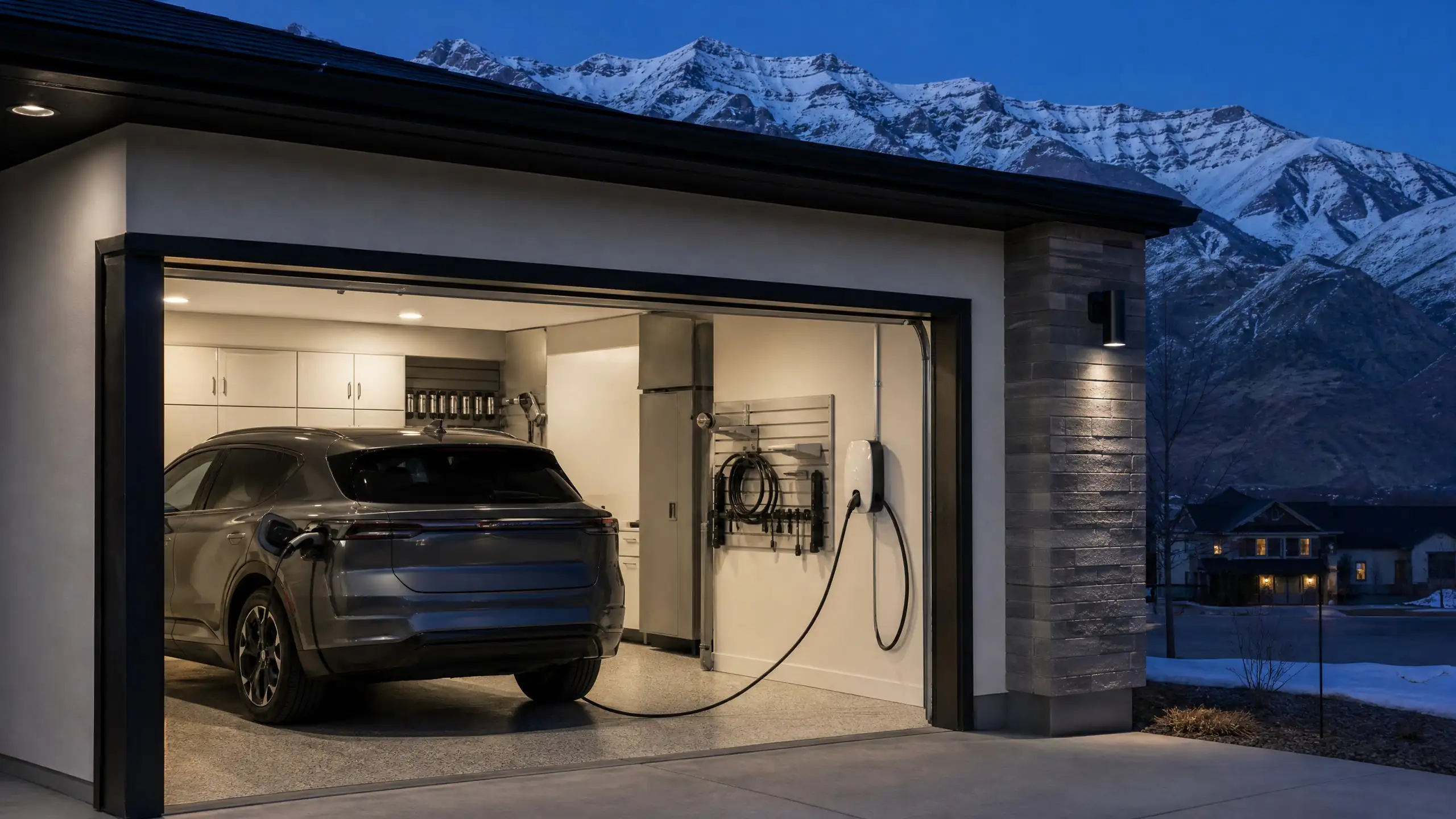
Electric SUV charging from a wall-mounted Level 2 charger in an attached garage at dusk

If you're shopping for an EV charger install, this probably sounds familiar

The quote came back with a panel upgrade

Sometimes that's right. Often a load calculation, a lower amperage setting or a load management device does the job for a fraction of the cost.

How load management avoids an upgrade

Three quotes, three different prices

One includes the charger, one includes a permit, one includes neither. Without the variables spelled out, there is nothing to compare.

What actually moves the price

Nobody can say what your car needs

A 48 amp charger on a car that accepts 32 amps buys nothing. The car's onboard charger should decide the circuit, not the biggest box on the shelf.

Match the circuit to your car

The rebate you read about is gone

Rocky Mountain Power ended its home charger rebate on January 1, 2026, and the federal 30C credit ended for chargers placed in service after June 30, 2026. Plenty of sites still list both.

Current Ogden incentives, with sources

An electrician that only installs EV chargers

General electricians install EV chargers alongside everything else. Ogden EV Charger Pros does EV charging and nothing else, so the questions that matter come first: what your car can accept, what your panel can spare, and the cleanest route from the breaker to where you park.

Most homes end up with a Level 2 charger on a dedicated 240-volt circuit. That turns an overnight plug-in into a full battery for nearly every daily drive, where a standard 120-volt outlet adds only a few miles of range per hour. We install wall-mounted chargers, NEMA 14-50 outlets for portable chargers, and the circuits, subpanels and load management equipment behind them, permitted and inspected where the city requires it.

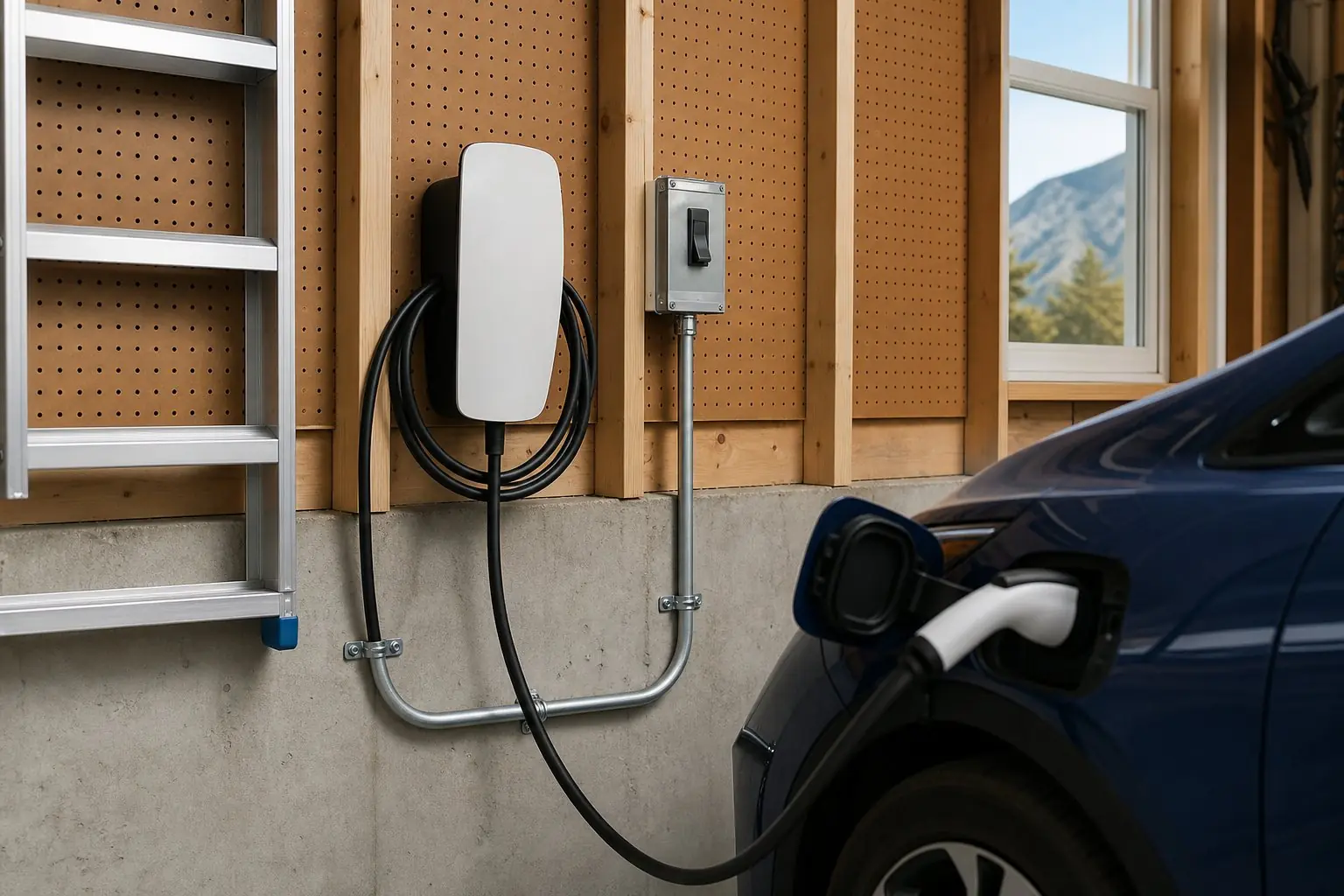
Hardwired Level 2 EV charger with conduit and a disconnect switch in a garage

Level 2 home charging, sized to your car

Your car's onboard charger sets the ceiling. Installing a 48 amp charger for a car that accepts 32 amps adds cost without adding speed, so we start with the vehicle.

Charger output and the circuit it needs (240 volts)
Charger outputCircuit breakerPowerTypical fit
24 amps30 amp5.8 kWPlug-in hybrids and short commutes
32 amps40 amp7.7 kWMany EVs, and smaller panels with limited room
40 amps50 amp9.6 kWThe most a NEMA 14-50 outlet can deliver
48 amps60 amp11.5 kWHardwired only, for cars with 11 kW or larger onboard chargers

EV chargers are continuous loads, so the circuit is rated at 125 percent of the charger's output. Onboard charger ratings vary by model and trim, even within one model year. Check yours in our vehicle charging guides or the EV charger finder.

Panel capacity, load calculations and dedicated circuits

Does an EV charger need a dedicated circuit? Yes. A Level 2 charger runs at high current for hours, so it gets its own 240-volt circuit with wire and a breaker sized for that charger. It should never share a circuit with a dryer, range or welder.

Whether your panel can carry that circuit is a math question, not a guess. A load calculation adds up what the house already uses, from the furnace and water heater to the range, dryer and air conditioning, and shows how much capacity is left. Ogden's older housing stock makes this step matter: about 44 percent of Ogden's homes were built before 1960, and those houses were wired for far less load than a home that charges an EV every night.

When the numbers are tight, a full panel upgrade is one answer. Often it is not the only one. A smaller charger setting or an EV load management device, which turns charging down whenever the rest of the house is drawing heavily, can let an existing service handle an EV. The electrical code recognizes both approaches.

Every quote starts with a load calculation, and load management is priced before any upgrade.

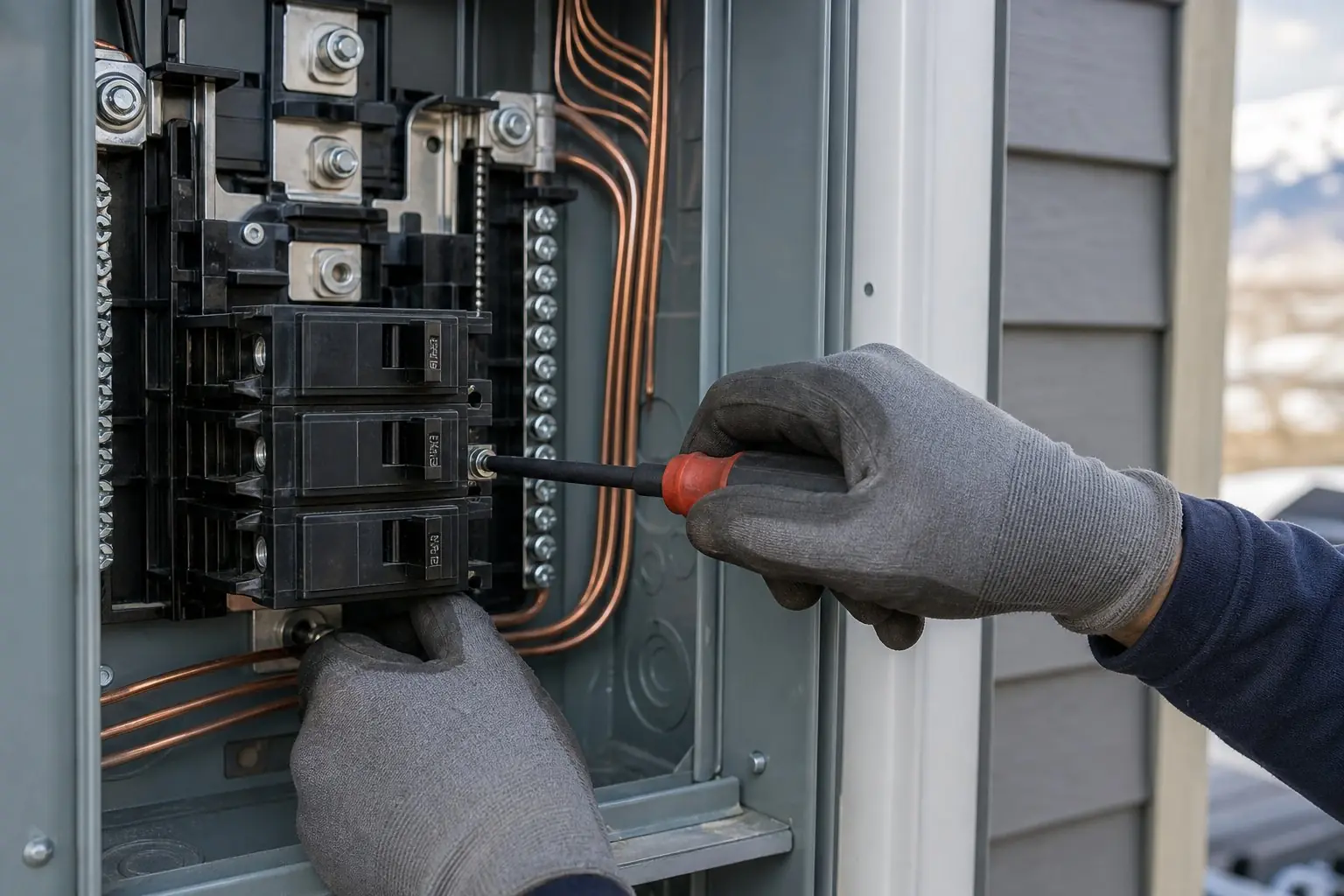
Electrician installing a two-pole breaker in a residential panel for an EV charger circuit

Hardwired charger or NEMA 14-50 outlet?

Both work. The right one depends on your car, your charger and whether you want to take the charger with you when you move.

 Hardwired chargerNEMA 14-50 outlet
Maximum chargingUp to 48 amps (60 amp circuit)Up to 40 amps (50 amp circuit)
GFCI protectionBuilt into the chargerGFCI breaker required for EV receptacles in Utah
Wear pointsNo plug to loosen or heat upUse an industrial-grade receptacle; cheap ones can overheat
PortabilityStays with the houseUnplug a portable charger and take it with you
Best forDaily drivers, outdoor installs, 48 amp carsRenters, portable chargers, flexible setups

Utah adopted the 2023 National Electrical Code statewide and removed 240-volt receptacles from the general GFCI rule, but receptacles installed for EV charging still need GFCI protection under the EV article. That GFCI breaker is one reason NEMA 14-50 installs cost more than people expect, and occasionally nuisance-trip with some portable chargers.

Tesla Wall Connector and every other EV

North American charging is moving to Tesla's connector, now standardized as SAE J3400 (often called NACS). Many 2025 and 2026 models from other brands now ship with that port, while millions of cars still use J1772. The right charger depends on which one your car has and what you might drive next.

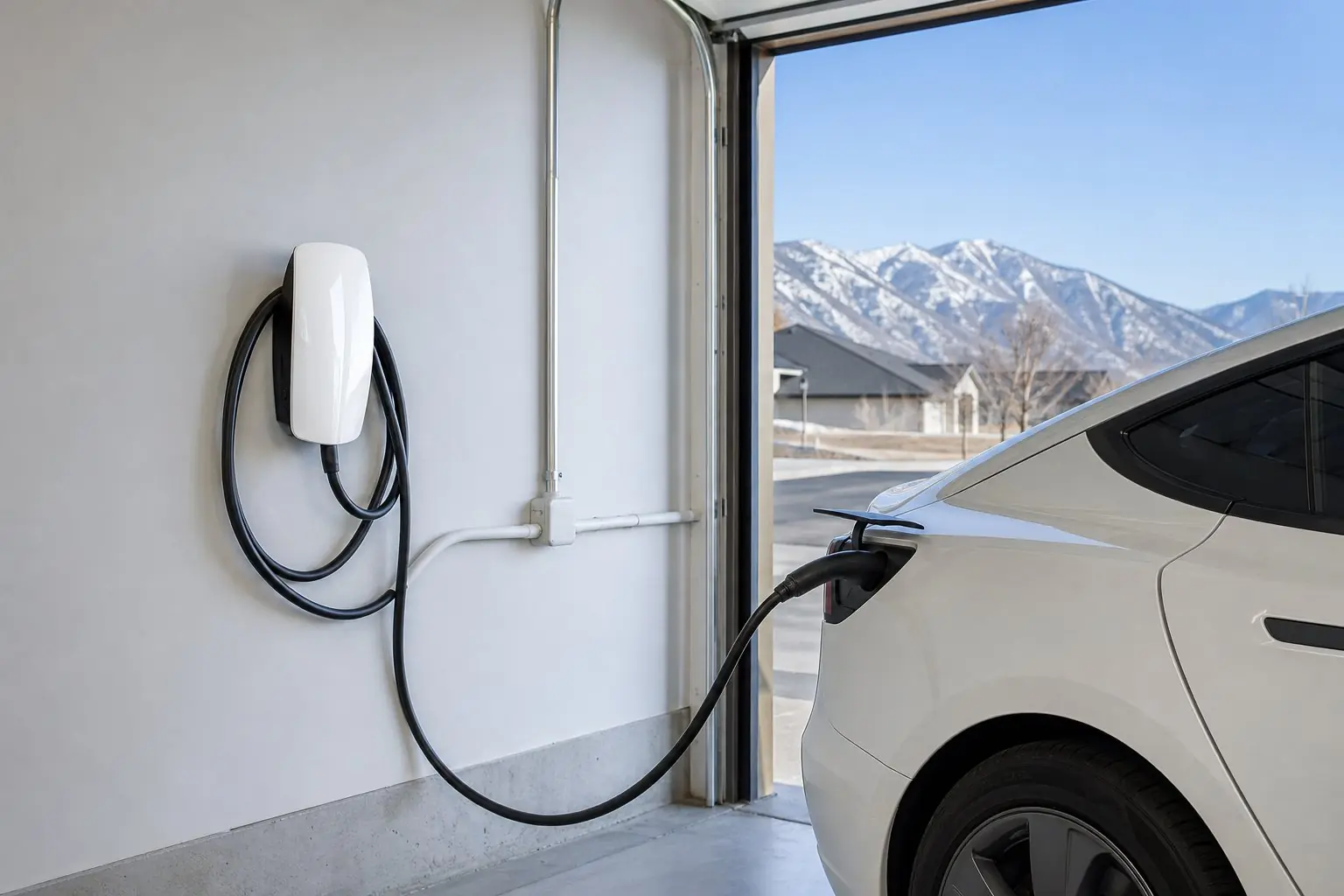
Wall-mounted EV charger with an integrated cable connected to a sedan in a clean garage

Tesla Wall Connector installation

Tesla's Universal Wall Connector has a built-in adapter, so it charges Tesla and J1772 cars from one unit. Tesla's installation manual lists output adjustable up to 48 amps (11.5 kW) on a 60 amp breaker. It is hardwired only, and power sharing lets several units share one circuit's capacity. We set the amperage to match your circuit and commission the unit in the Tesla app.

Tesla Wall Connector installation in Ogden

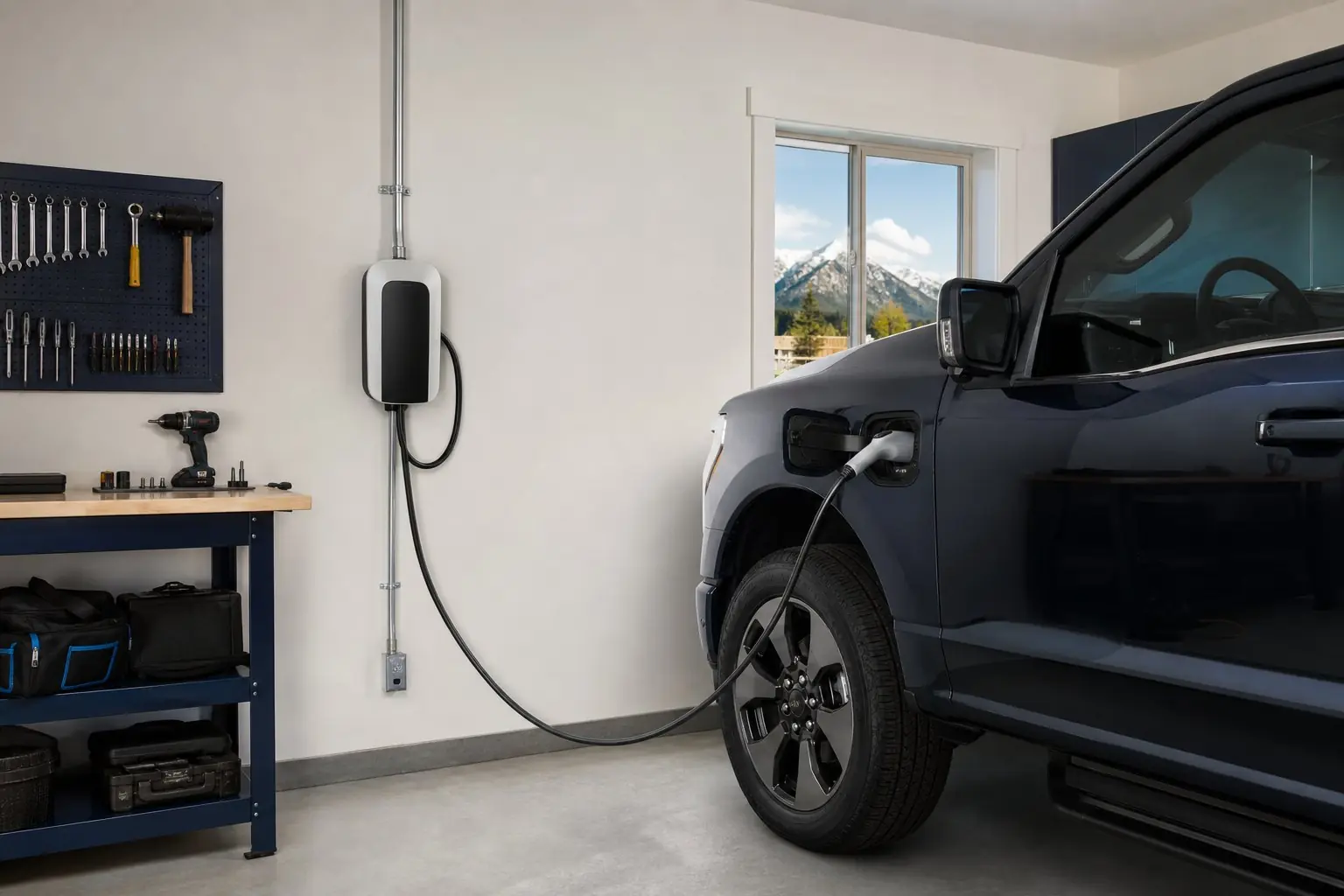
Electric pickup truck charging from a wall-mounted charger in a home garage

Ford, Rivian, GM, Hyundai, Kia and more

Non-Tesla owners have more choices, from the charger the automaker sells to ChargePoint, Wallbox, Emporia, Grizzl-E and Autel. We look at your car's port and onboard charger, whether you want app scheduling for off-peak rates, and whether the unit is rated for outdoor use.

Find your car: Tesla, Ford, Rivian, Chevrolet, Hyundai, Kia or all vehicles.

Compare chargers in the charger guide.

Chargers we install

Hardwired and plug-in Level 2 units from the major brands, including chargers you have already bought.

EV makes we support

If it charges on J1772 or the Tesla connector, it charges at home on Level 2.

  • Tesla
  • Ford
  • Rivian
  • Chevrolet
  • GMC
  • Cadillac
  • Hyundai
  • Kia
  • BMW
  • Mercedes-Benz
  • Volkswagen
  • Audi
  • Porsche
  • Nissan
  • Toyota
  • Lexus
  • Volvo
  • Polestar
  • Honda
  • Acura
  • Lucid

How installation works: the Right-Size Install

Car first, then charger, then panel, then the route. Each step answers one question before the next one costs you anything.

  1. Send photos

    Tell us your car and charger and attach a photo of your open panel and where you park. No site visit needed to get started.

  2. Plan the circuit

    We confirm panel capacity, amperage and the wire route, and flag anything that changes the price before work starts.

  3. Permit

    We apply for the electrical permit with your city: Ogden, South Ogden, North Ogden or Ogden Valley City.

  4. Install

    Breaker, wire, conduit and the charger or outlet, mounted and routed cleanly, then tested under load.

  5. Inspect and hand over

    The city inspects the work. We walk you through the charger settings, app and scheduling.

Indoor, outdoor and detached garage installs

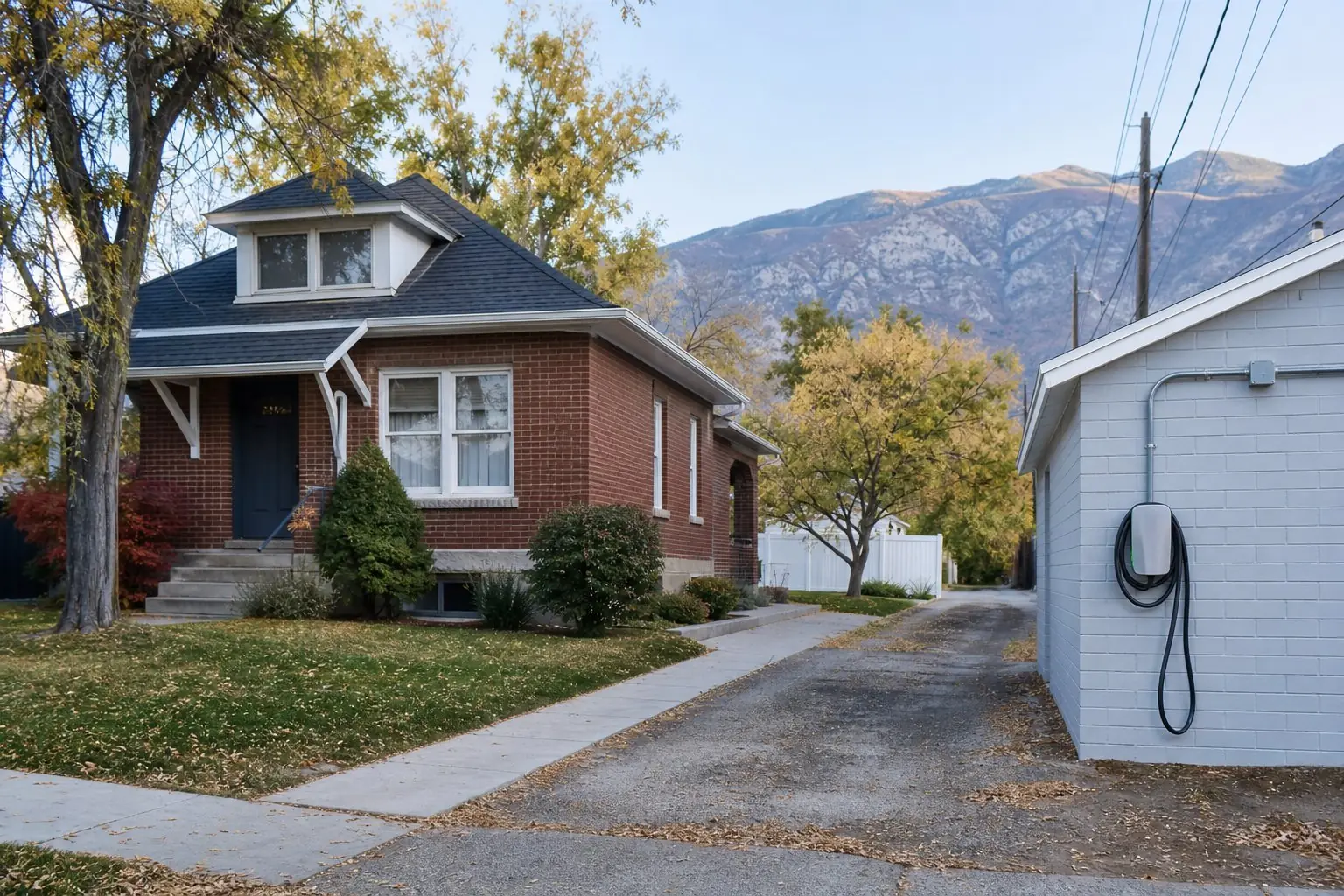
An attached garage with the panel on a shared wall is the simplest job. Plenty of Ogden homes are not like that. City plans for older neighborhoods such as Hillcrest/Bonneville and Horace Mann describe garages set at the back of the lot, often detached, which means a longer run, sometimes underground, and sometimes a subpanel in the garage.

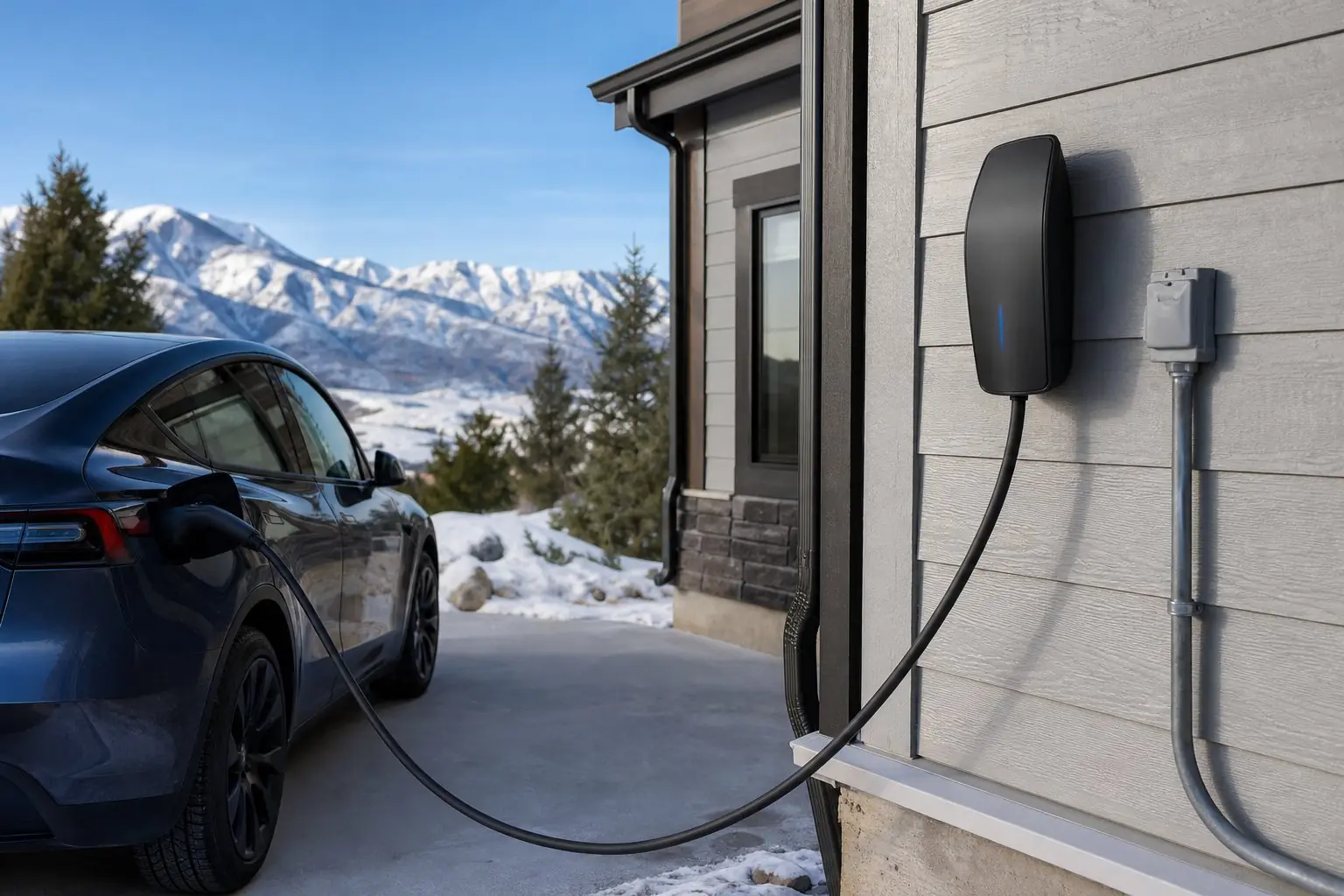
Outdoor chargers need an enclosure rated for weather, sealed fittings and a holster that keeps the connector out of the snow. In Eden and the rest of Ogden Valley, NOAA's 1991 to 2020 normals at Pineview Dam show a January average low of about 9.5°F, around 16 nights a year at or below zero, and about 108 inches of snow. We place outdoor chargers where plows, shovels and drifting snow will not reach them.

Outdoor-rated EV charger on a home exterior charging a car in winter

Commercial, workplace and multifamily charging

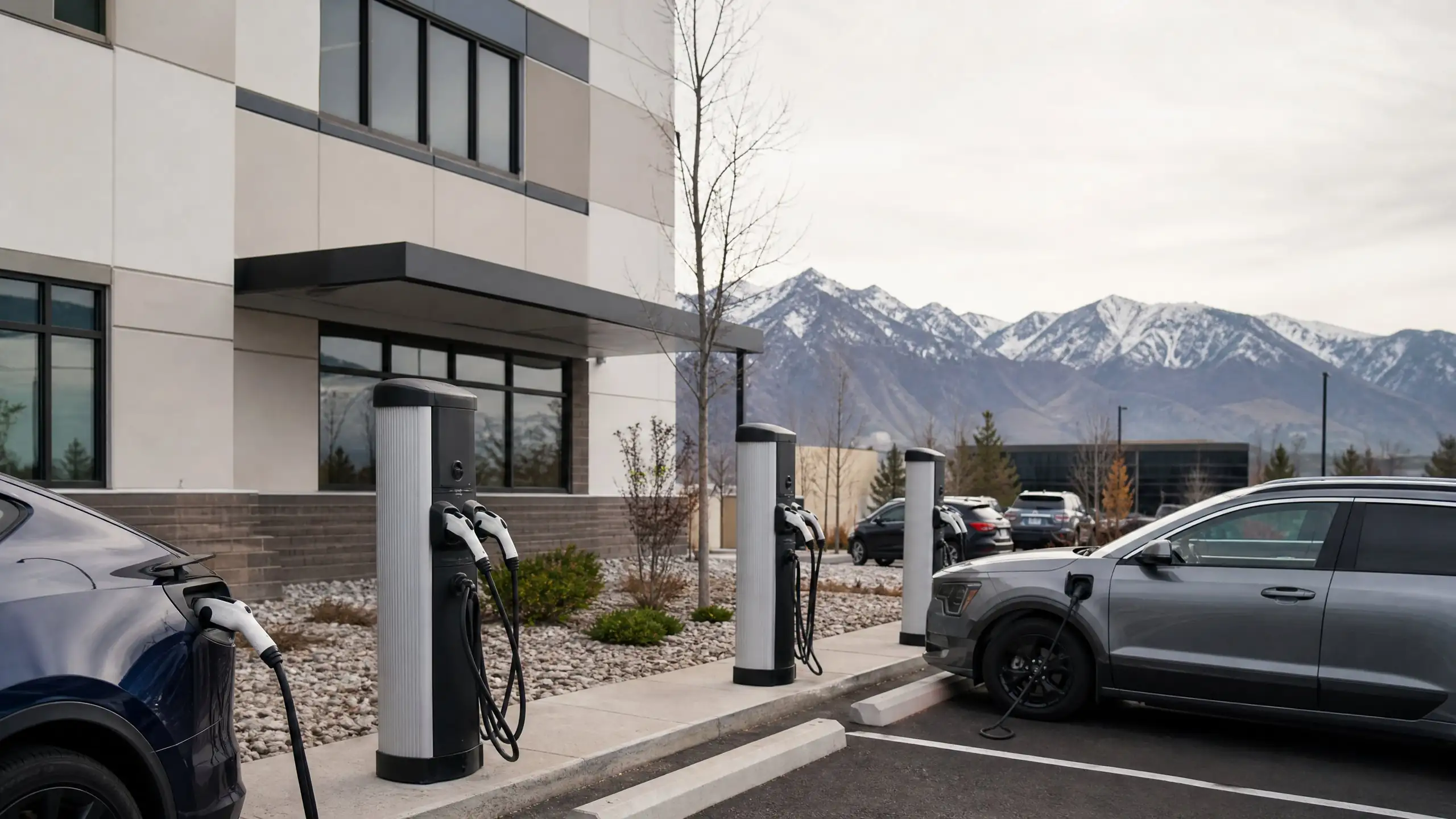
Businesses, HOAs and apartment owners in the Ogden area face different questions: how many ports, who pays for the electricity, and how to avoid a demand charge. Under Rocky Mountain Power's Utah tariffs, a small business stays on Schedule 23 only while its demand is 30 kW or less in at least 7 of any 12 months and never above 35 kW; otherwise it moves to demand-billed Schedule 6. Three 48 amp chargers running at once draw about 34.5 kW, so together with the building's own load they can push a site over. Networked chargers with power sharing or load management keep that in check.

Rocky Mountain Power's commercial program offers Live incentives covering 75 percent of charger cost, up to $1,000 for a single-port or $1,500 for a dual-port Level 2 charger purchased on or after January 1, 2026, with funding first come, first served. Program details change, so we confirm current terms before you buy.

See commercial EV charger installation, multifamily charging and workplace charging.

Dual-port pedestal Level 2 EV chargers in a business parking lot

What EV charger installation costs in Ogden

Advertised prices around Ogden run from a few hundred dollars to several thousand, and some include the charger while others do not. A flat number is wrong for most homes. These are the things that move the price.

Older brick bungalow with a detached rear garage fitted with an EV charger

Distance from the panel

The single biggest factor. Every foot adds wire and conduit, and the heavier wire for 48 amp charging costs more per foot.

Panel capacity

Room for a two-pole breaker, enough spare capacity, or neither.

Amperage

A 60 amp circuit needs larger wire than a 40 amp circuit.

Wall and route

Finished drywall, attics and crawlspaces each change the labor.

Detached or outdoor

Trenching, outdoor-rated parts and sometimes a subpanel.

Charger, outlet and permit

Hardwired or NEMA 14-50 with a GFCI breaker, load management if needed, and the city permit fee. See the full EV charger installation cost guide.

Ended Many sites still advertise home charger rebates that no longer exist. Rocky Mountain Power's residential charger incentive was removed effective January 1, 2026, and the IRS says the federal 30C credit does not apply to chargers placed in service after June 30, 2026.

Want a number for your house? Two photos and your car model help us size the job before anyone visits.

Get my installation quote

Ogden permits and inspections

Ogden City's permit page states that a permit is required for an electrical system when you alter, change, extend, install, repair or replace it. A new 240-volt EV charging circuit is exactly that. Homeowners living in the home may pull their own permit in Ogden; rentals need a licensed contractor.

  • Ogden: Ogden City Building Services, online through its permit portal
  • South Ogden and North Ogden: each city's own building department
  • Eden: Ogden Valley City, incorporated in December 2025, now handles permits that used to go through Weber County
  • Some North Ogden addresses in the Coldwater and Southtown areas sit in unincorporated county pockets, so jurisdiction is checked by address

We are not the permit office, and requirements change. The Ogden EV charging guide keeps the current details with links to each city.

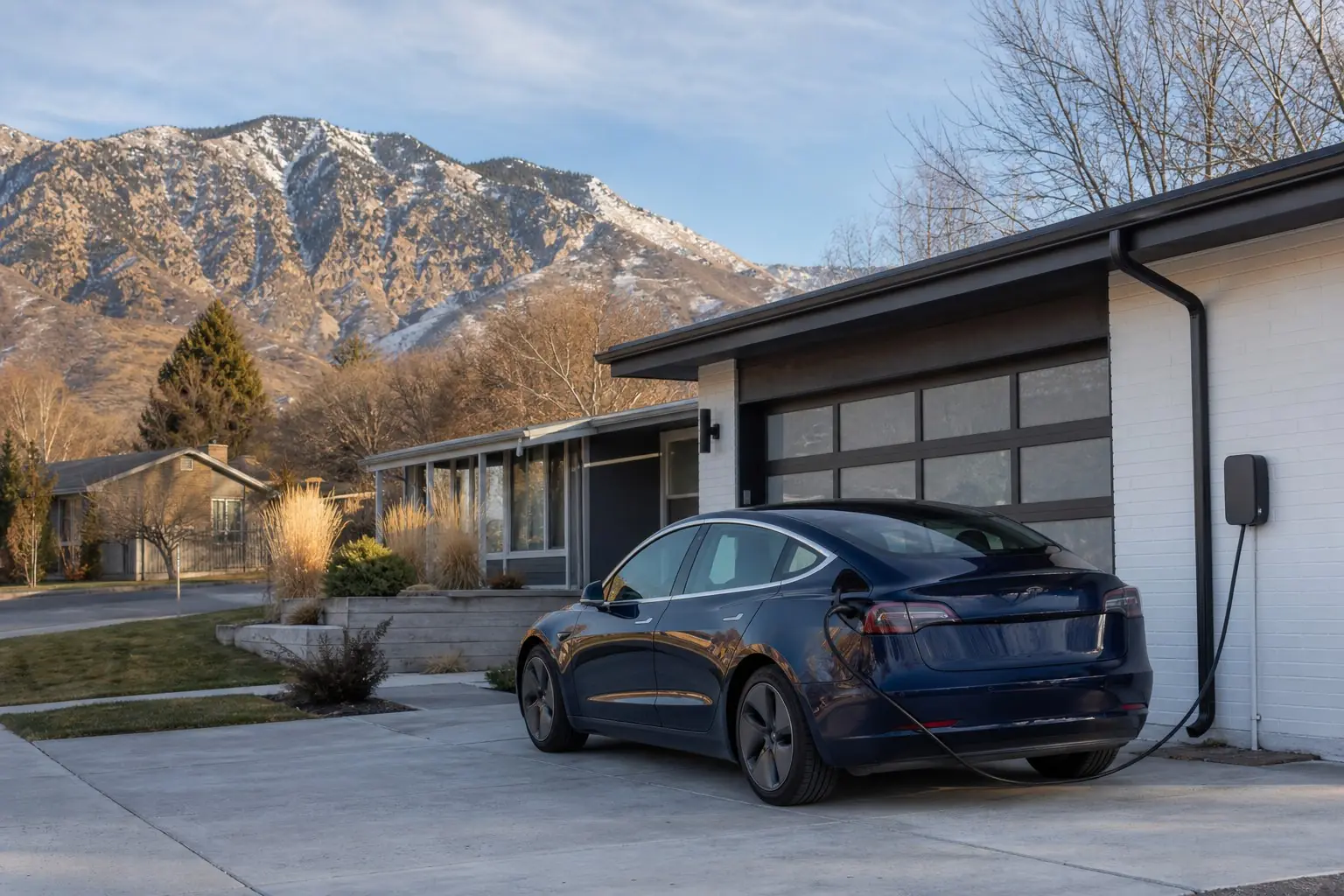
Electric car charging in a driveway on a residential street below the Wasatch foothills

Why professional installation matters

A Level 2 charger pulls up to 48 amps for hours at a time, every night. Connections that would be fine on a toaster circuit can heat up under that load. A loose lug, undersized wire or a bargain receptacle is the usual story behind a melted NEMA 14-50 outlet or a breaker that trips at 2 a.m.

A permitted install gets the wire gauge, breaker, torque and GFCI protection right, and an inspector checks it. That record also matters to your homeowner's insurance and when you sell the house. If your current setup is already acting up, start with our EV charger troubleshooting guides, and stop and call an electrician if anything smells hot, discolors or buzzes.

Service area

We keep a tight service area so we can know the homes, permit offices and conditions well.

Ogden

From Jefferson and East Central to Mount Ogden, Taylor, T.O. Smith and Southeast Ogden.

South Ogden

City Center, Burch Creek and the neighborhoods off Washington and Harrison Boulevards.

North Ogden

Old Town, Hillside, Coldwater and Southtown below Ben Lomond.

Eden

Eden, Liberty and Wolf Creek in Ogden Valley City.

EV charger installation questions

How much does EV charger installation cost in Ogden?

It depends mostly on the distance from your panel to the charger, whether your panel has room for a new 240-volt circuit, the amperage you need, and whether the run is inside a finished wall, through an attic, or to a detached garage. We quote each job from your panel and location photos instead of publishing a flat price that would be wrong for most homes.

Do I need a permit to install an EV charger in Ogden?

Usually, yes. Ogden City requires a permit to install, alter, change, extend, repair or replace an electrical system, and a new 240-volt EV circuit falls under that. South Ogden and North Ogden issue their own electrical permits, and Eden addresses now go through Ogden Valley City rather than Weber County.

Do I need a 200 amp panel for a Level 2 charger?

Not always. Many 100 to 150 amp services can support a Level 2 charger once a load calculation shows the spare capacity, sometimes at a lower amperage or with a load management device that limits charging when the house is busy. A panel upgrade is the answer when the numbers say it is, not by default.

What size breaker does a Level 2 EV charger need?

An EV charger is a continuous load, so the circuit is sized at 125 percent of the charger's output. A 32 amp charger needs a 40 amp circuit, a 40 amp charger needs a 50 amp circuit, and a 48 amp charger needs a 60 amp circuit. Your car's onboard charger decides how much of that it can actually use.

Is a hardwired charger better than a NEMA 14-50 outlet?

A hardwired charger can deliver up to 48 amps, has no plug to wear out, and avoids the GFCI breaker that Utah still requires on EV charging receptacles. A NEMA 14-50 outlet tops out at 40 amps of charging and lets you take a portable charger with you. Both are good choices for the right car and garage.

Can you install a charger outside in Ogden or Eden winters?

Yes, as long as the charger and every fitting are rated for outdoor use and the cable can be stored off the ground. Eden sees January lows near 10 degrees and over 100 inches of snow a year, so placement, cable length and snow clearing matter as much as the hardware.

Is there still a rebate for a home EV charger in Utah?

Not from Rocky Mountain Power. Its residential charger incentive was removed effective January 1, 2026, and the federal 30C credit does not apply to chargers placed in service after June 30, 2026. Rocky Mountain Power still offers incentives for business, workplace and multifamily chargers.

Request an EV charger installation quote

Tell us your car, your charger and where you park. Photos of your panel and the charger spot let us size the circuit before we visit.

  • Ogden, South Ogden, North Ogden and Eden
  • Home, Tesla, commercial and multifamily
  • Chargers you already own, or help choosing one

Sending this doesn't commit you to anything. It gets you a straight answer about your panel and a quote you can compare.

Or call (385) 521-0511

You
Your car and charger
Photos (optional, but they help)

A photo of your open panel door (breaker labels visible) and one of where you want the charger. Images only, about 8 MB total.

We use the information you send only to respond to your inquiry. Privacy policy

Get a QuoteCall