
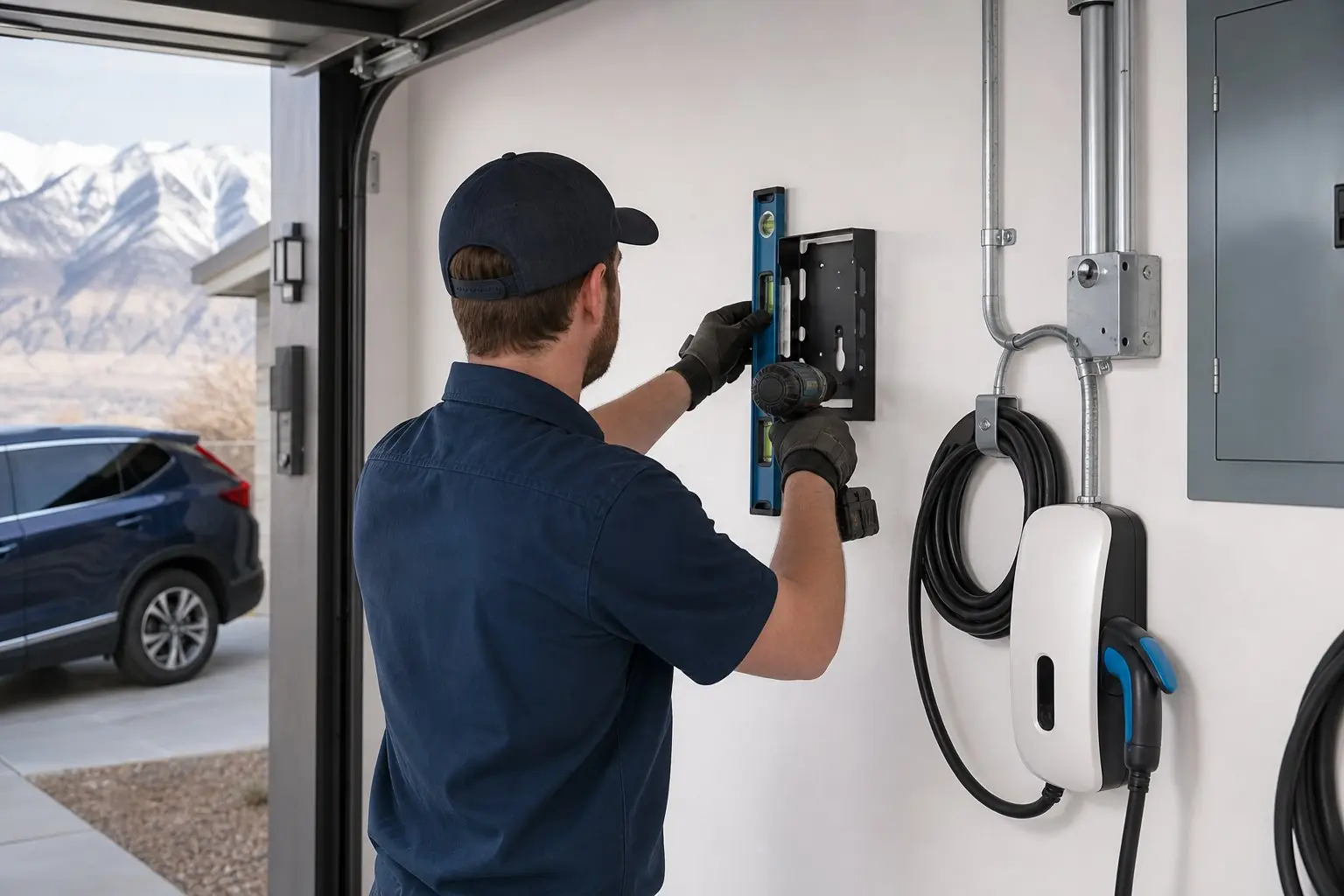
What is the difference between the 40A and 48A Pulsar Plus?
Output and connection. The 40 amp model delivers 9.6 kW and comes as a NEMA 14-50 plug-in or hardwired unit. The 48 amp model delivers 11.5 kW and is hardwired only. Both have a 25 foot cable, a J1772 or NACS connector, Wi-Fi and Bluetooth, and the same small 4.4 pound body.
| Spec | Pulsar Plus 40A | Pulsar Plus 48A |
|---|---|---|
| Output | 40 A, 9.6 kW | 48 A, 11.5 kW |
| Connection | NEMA 14-50 or hardwired | Hardwired only |
| Circuit | 50 A | 60 A |
| Connector | J1772 or NACS | J1772 or NACS |
| Cable | 25 ft | 25 ft |
| Enclosure | NEMA Type 4 | NEMA Type 4 |
| Operating temperature | -22°F to 104°F | -22°F to 104°F |
| Size and weight | 7.8 x 7.9 x 3.9 in, 4.4 lb | 7.8 x 7.9 x 3.9 in, 4.4 lb |
Specs are from Wallbox's North American datasheet dated October 2025 (model PUP2). The part number tells you which you have: a "C" in the version position means hardwired and "N" means NEMA 14-50 plug, while "5" means 9.6 kW and "6" means 11.5 kW. Wallbox's shop lists a three-year warranty. Comparing brands? See our home EV charger comparison.
How is the charging current set?
With a rotary switch inside the charger, set by the installer to match the breaker. Wallbox's datasheet says the hardware selector covers 16 amps up to the model's rating, and the app can lower it further, down to 6 amps. When the current is set below the rating, Wallbox supplies a label to stick over the original.
| Switch position | Max current | Breaker |
|---|---|---|
| 2 | 16 A | 20 A |
| 3 | 20 A | 25 A |
| 4 | 24 A | 30 A |
| 5 | 32 A | 40 A |
| 6 | 40 A | 50 A |
| 7 | 48 A (48A model only) | 60 A |
Positions are from Wallbox's 2022 North American Power Boost installation guide. Check the chart in your unit's own guide before setting it.
A physical switch is a practical difference from app-only chargers: the circuit limit is set inside the box before the cover goes on, and a phone app cannot raise it past that. The installation guide also sets limits on the wiring: the terminal takes wire up to 6 AWG and "other AWG sizes are not supported," and the terminal screws are torqued to 11.5 inch-pounds. Breaker sizing in general is explained in what size breaker for an EV charger.
What does Power Boost need?
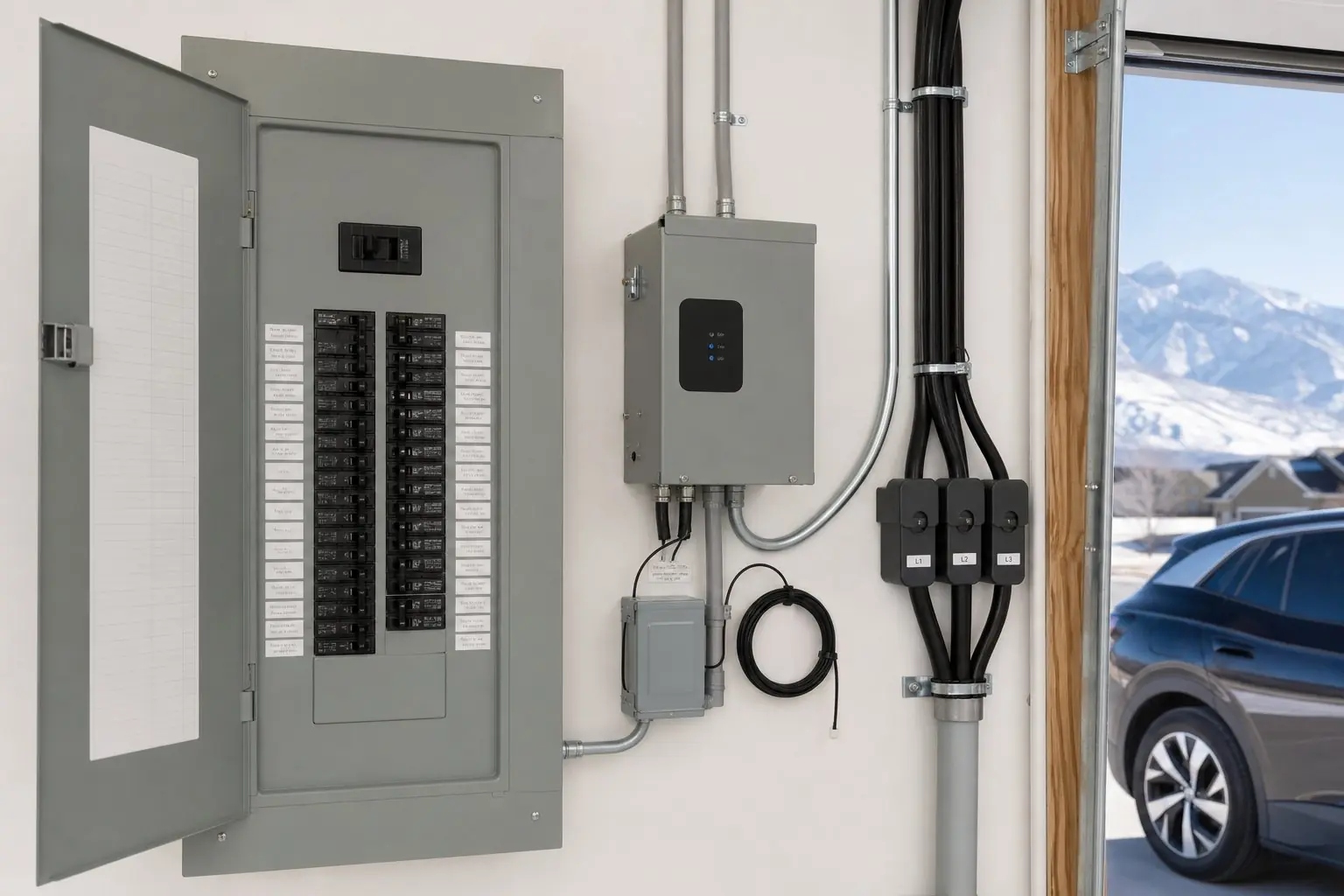
A Wallbox-sold energy meter installed in or near the main panel, with current clamps on the incoming hot conductors and a wired data cable to the charger. Wallbox now calls the feature Dynamic Load Management. The installer enters the panel's maximum current in the myWallbox app, and the charger slows down whenever the house gets close to it.
Wallbox's North American guide spells out the hardware. The meter only works on a three-wire, 120/240 volt split-phase service, which is the normal setup for a house. It is supplied with 250 amp clamps, sits on its own breaker of 20 amps or less, and talks to the charger over shielded Cat 5e cable, up to 1,600 feet. Setup is done over Bluetooth in the app under Settings, Upgrades, Power Boost, and the guide warns not to "enable a higher power rating if otherwise restricted by local rules."
This is the same idea as the energy management systems the 2023 NEC recognizes in 220.70, which can let a charger fit on a panel that a plain load calculation would call full. Whether an inspector accepts a given setup is a local call. The code side, and other ways to avoid a service upgrade, are on our EV charger load management page. Wallbox also sells a 48 amp NACS bundle with the meter and an enclosure; it showed as sold out when we checked.
Is 104°F a problem for mounting?
It is the one Pulsar Plus spec to plan around. Its operating range is -22°F to 104°F, while many competing units, including ChargePoint's Home Flex and Emporia's Pro, are rated to 122°F. The cold end is fine for Ogden and Eden winters. For the hot end, choose a garage wall or a shaded exterior wall over one in full afternoon sun.
Wallbox rates the NEMA Type 4 enclosure for indoor and outdoor use. Wallbox recommends a mounting height of 50 to 67 inches, with an 18 inch minimum. The NEMA 14-50 version has a 12 inch cord, and Wallbox recommends installing the outlet with the ground pin facing down. Exterior placement is covered on outdoor EV charger installation.
App, schedules and solar
The Pulsar Plus is run from the Wallbox app over Wi-Fi or Bluetooth: play, pause, lock and charging schedules, with user and admin permission levels. A schedule that starts at 10 p.m. keeps charging out of the weekday 6 to 10 p.m. on-peak window on Rocky Mountain Power's optional time-of-use plan. The datasheet also lists Eco-Smart solar charging and OCPP 1.6j, the open protocol some networks use; solar charging uses the same meter accessory as Power Boost. A lock in the app is useful on an exterior wall that neighbors can reach.
GFCI and the 14-50 version
Wallbox's guide says the Pulsar Plus has built-in 20 mA ground-fault protection and, for hardwired installs, "an additional GFCI breaker is optional, as per article 625.54." A 40 amp plug-in unit on a NEMA 14-50 is the case where Utah's adopted code requires GFCI protection on the receptacle. If that combination trips, read EV charger keeps tripping the breaker, and compare connections on hardwired vs NEMA 14-50.
Wallbox's guide also asks for any permits required by the local authority. Ogden's process is on EV charger permits in Ogden. If you already own a Pulsar Plus, we can install the unit you supply.
Wallbox Pulsar Plus questions
Is the Wallbox Pulsar Plus 48A plug-in?
No. Wallbox's October 2025 datasheet lists the 48 amp model as hardwired only. The 40 amp model comes as either a NEMA 14-50 plug-in or a hardwired unit. The 48 amp model needs a 60 amp circuit; the 40 amp model needs 50 amps.
What is Wallbox Power Boost?
Power Boost, now called Dynamic Load Management in Wallbox's help pages, uses a Wallbox-sold energy meter with current clamps on the home's service conductors. The charger slows down when the house is drawing heavily so total load stays under the limit entered in the myWallbox app.
Can a Pulsar Plus be mounted outside in Utah?
Yes. It has a NEMA Type 4 enclosure and an operating range of -22°F to 104°F. The cold end covers Ogden Valley winters. The 104°F ceiling is lower than many chargers, so a shaded wall or a garage beats a spot that bakes in afternoon sun.
Do I need a GFCI breaker for a Wallbox Pulsar Plus?
For a hardwired unit, Wallbox's installation guide calls an additional GFCI breaker optional, citing NEC 625.54, because the charger has 20 mA ground-fault protection built in. For the NEMA 14-50 version, Utah's adopted code requires GFCI protection on the receptacle.
Installing a Pulsar Plus? Tell us which model you have, your car, and where it will mount.
Get a Pulsar Plus installation quote