
Does an EV charger need a dedicated circuit?
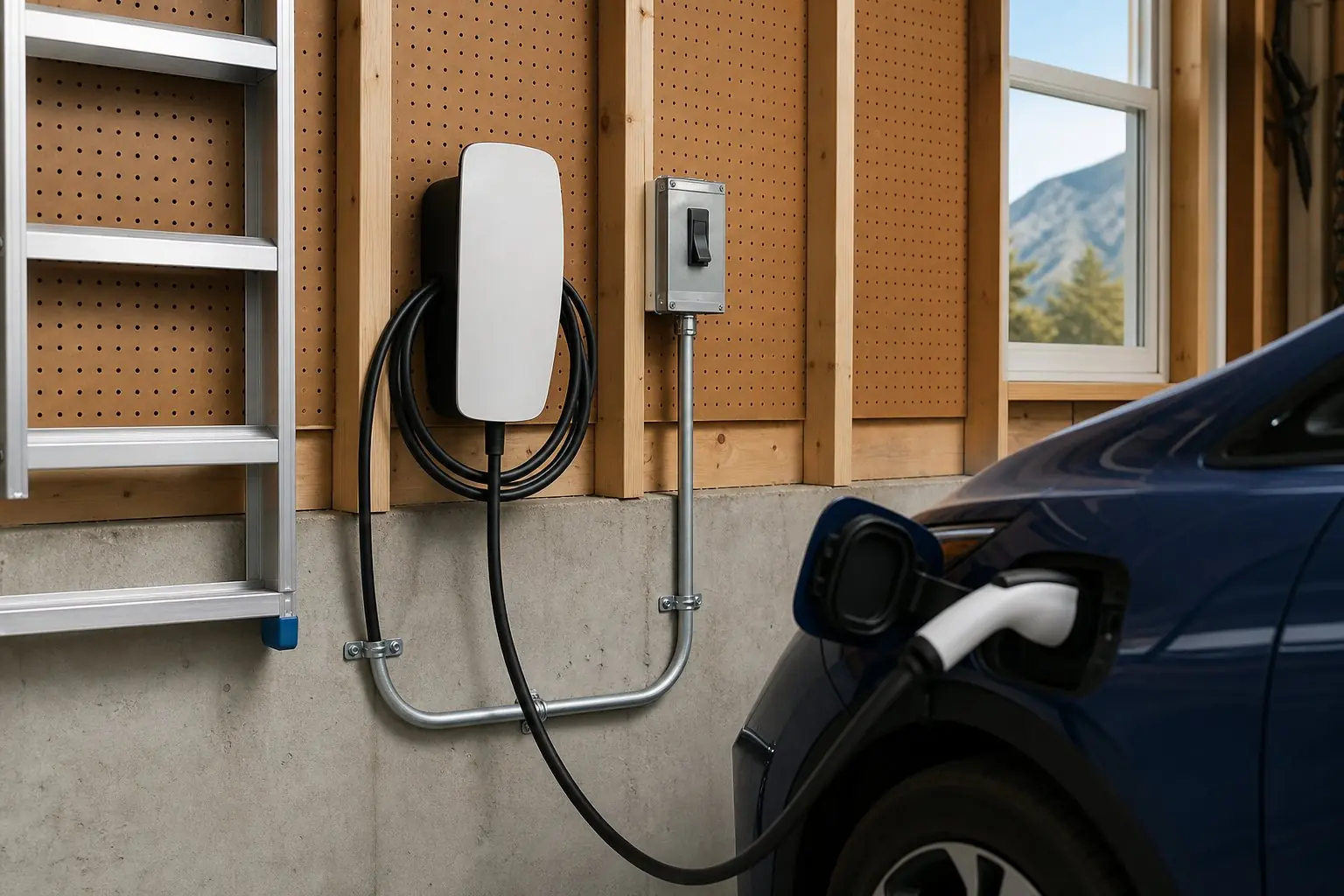
Yes, for any Level 2 charger. NEC 625.40 says charging equipment rated over 16 amps or over 120 volts must be supplied by an individual branch circuit: a circuit from the panel that feeds the charger and nothing else. Every 240 volt home charger meets that threshold, whether it is hardwired or plugs into an outlet.
The wording, as Mike Holt Enterprises summarizes the 2023 NEC: equipment "rated greater than 16A or 120V must be supplied by an individual branch circuit." Utah has used the 2023 NEC statewide since July 1, 2025.
Why does the code require it?
Because EV charging is a continuous load. A car can draw its full current for hours, and the code sizes the circuit for that by requiring a breaker of at least 125 percent of the charger's rating. A circuit shared with other loads could not hold that margin once something else switched on.
That is the same rule that sets the breaker size, explained in what size breaker for an EV charger. Charger makers say the same in their install guides. ChargePoint's electrician tips, for example, call for "a 240 V dedicated circuit with a new, dedicated" two-pole breaker, and add: "Only use new circuit breakers. Used breakers can damage equipment and introduce the potential for an electrical fire."
Can I share the dryer outlet?
Not by plugging the charger in where the dryer goes and swapping cords, and not by running both on one circuit at the same time. The dryer circuit is sized for the dryer. A charger used there long term needs its own circuit, or a listed device that switches power so the charger and dryer never draw at once.
Two practical problems come up with dryer receptacles:
- Size. A 30 amp dryer circuit supports about 24 amps of charging at most. Tesla's Mobile Connector draws 24 amps on its 14-30 and 10-30 adapters.
- Receptacle duty. Not every receptacle is meant for hours of charging. Leviton labels one of its 14-30 receptacles, the 278, "Not Recommended for Electric Vehicle Charging." Check what is in your wall before using it nightly.
What about smart splitters?
A smart splitter plugs into an existing 240 volt outlet and switches power between the appliance and the car, so the circuit is never asked for both. NeoCharge lists its Smart Splitter as UL and cUL listed, and Splitvolt describes its Splitter Switch as cETLus certified. Both are indoor products.
A splitter avoids a new circuit, but it charges at the outlet's limits, usually about 24 amps on a 30 amp dryer circuit. Ask your building department how a splitter fits the individual branch circuit rule and the GFCI rule for EV receptacles before you rely on one. Product details and tradeoffs are on our EV charger load management page.
Can I use an extension cord or adapter?
No. Tesla's Mobile Connector manual says: "Do not use an extension cord, a multi-outlet adapter, a multi-plug, a conversion plug, or a power strip to plug in the Mobile Connector." Plug the charger directly into a correctly rated outlet in good condition.
Tesla's manual also warns against plugging into "a damaged, loose or worn power outlet" and says to consult an electrician to install a 240 volt outlet where you park.
Does Level 1 charging need its own circuit?
The code threshold is over 16 amps or over 120 volts, and a standard Level 1 cord draws 12 amps at 120 volts, so 625.40 does not strictly apply. The Department of Energy still describes Level 1 as using a "power outlet on a dedicated branch circuit," and that is the safer setup for nightly use.
A garage outlet that also feeds a freezer, a garage door opener or power tools can trip when those run during a long charging session. Tesla's Mobile Connector draws 12 amps (1.3 kW) on a standard 5-15 outlet. The Department of Energy estimates Level 1 adds approximately 5 miles of range per hour, and that 8 hours at 120 volts can replenish about 40 miles. For the full comparison, see Level 1 vs Level 2 charging.
Can two chargers share one circuit?
Only with equipment built for it. Tesla's Universal Wall Connector supports daisy chaining on a single 60 amp circuit, with all units limited to 48 amps combined. More often, each charger has its own circuit and the chargers share one current limit through power sharing, so two cars charge overnight without overloading the service.
Tesla's manuals say up to six Wall Connectors can share power this way, each on its own branch circuit. How these systems work, and what the code allows for load calculations, is covered on the load management page.
What goes into a dedicated charger circuit?
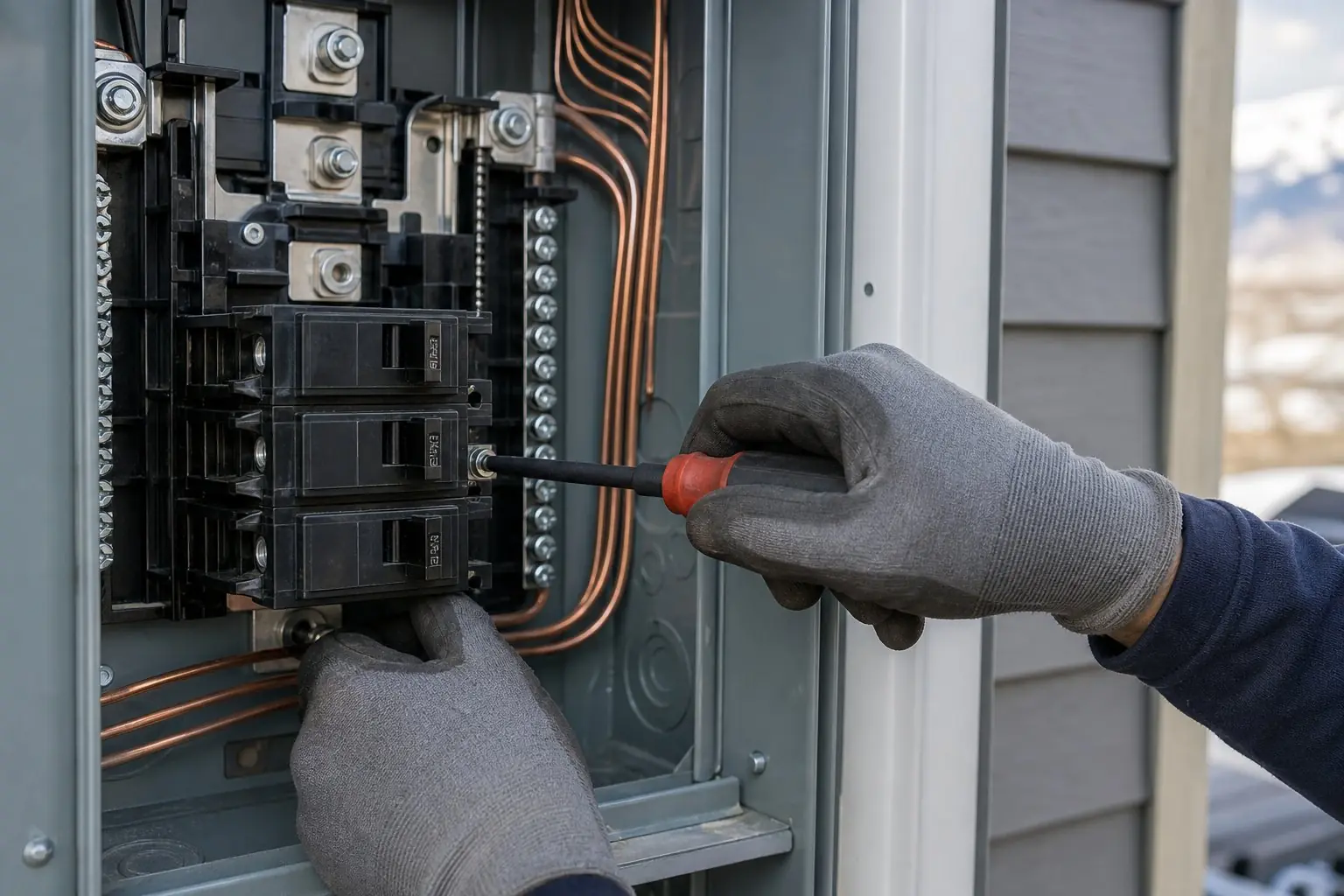
A two-pole breaker sized for the charger, wire rated for that breaker, and either a hardwired connection or a receptacle at the charger. A receptacle installed for EV charging needs GFCI protection in Utah. A new circuit also needs an electrical permit and inspection in Ogden, South Ogden, North Ogden and Ogden Valley City.
Room in your panel for that breaker is a separate question, covered in can my panel handle an EV charger. The GFCI rule is in EV charger GFCI requirements, and the circuit work itself is on our EV charger circuit installation page.
Dedicated circuit questions
Can I plug my EV charger into the dryer outlet?
Not as a permanent setup with both on one circuit at once. A Level 2 charger needs its own branch circuit under NEC 625.40. Some owners use a listed smart splitter that switches power between the dryer and the car, so the two never draw together. Ask your inspector how they treat one before relying on it.
Does a Level 1 charger need a dedicated circuit?
The NEC 625.40 threshold is over 16 amps or over 120 volts, so a 12 amp, 120 volt cord falls below it. The Department of Energy still describes Level 1 as using an outlet on a dedicated branch circuit. On a shared circuit, hours of steady draw plus other loads can trip the breaker.
Can I use an extension cord or adapter with a portable charger?
No. Tesla's Mobile Connector manual says not to use an extension cord, a multi-outlet adapter, a multi-plug, a conversion plug or a power strip. Plug the charger directly into a correctly rated outlet in good condition.
Can two chargers share one circuit?
Only with equipment designed for it. Tesla's Universal Wall Connector supports daisy chaining on a single 60 amp circuit, with all units limited to 48 amps combined. Otherwise, each charger gets its own circuit, or several chargers share one current limit through power sharing.
Need a circuit for your charger? Tell us your car model and where you park.
Get a charger circuit quote