
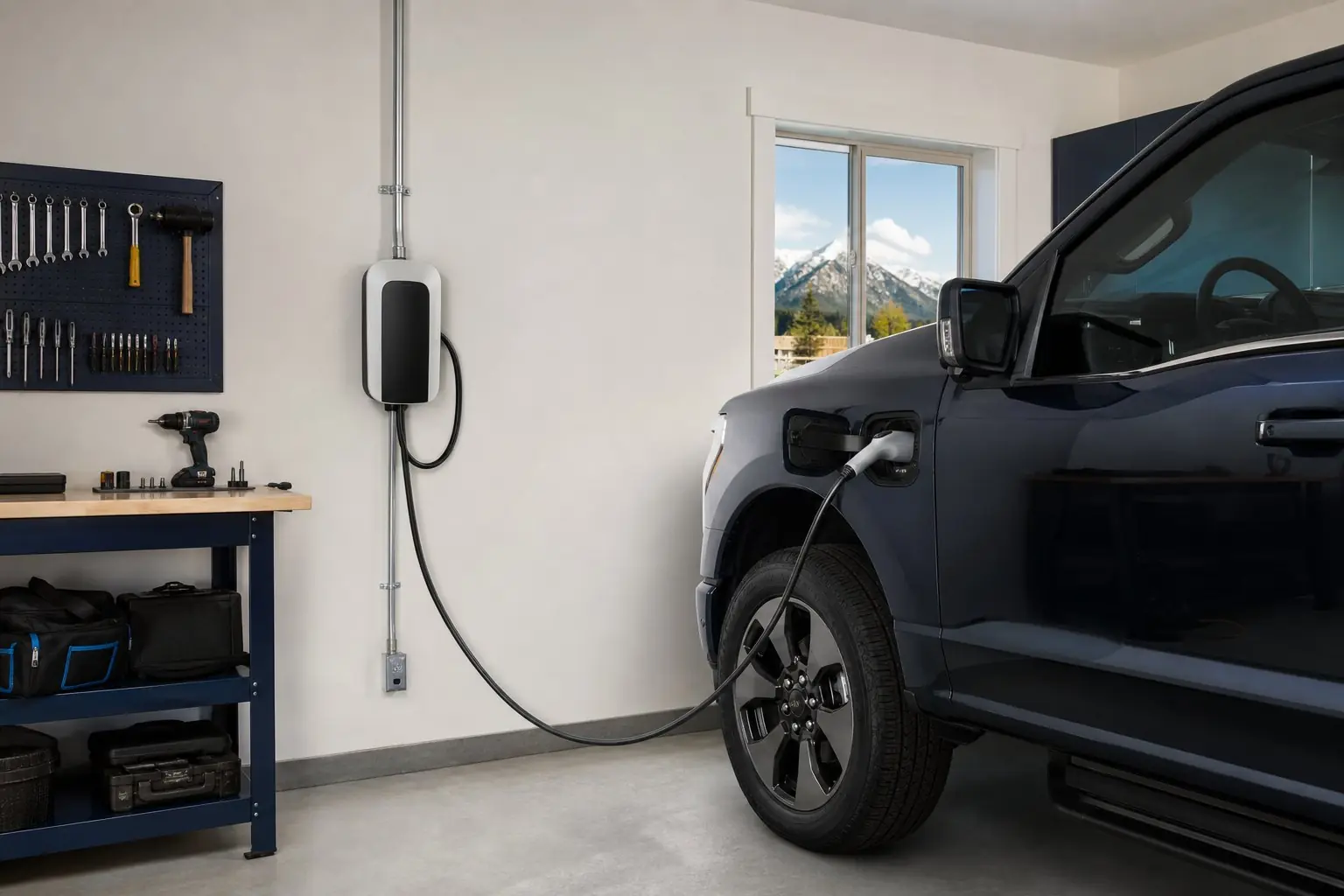
Which charge port does my R1T have?
It depends on the model year, not the generation. Rivian says 2022 to 2025 R1T trucks have a CCS1 port and 2026 and later trucks have a NACS port. Rivian labels its second-generation trucks "2025+", so a 2025 Gen 2 R1T still has CCS1. Check the model year on your registration before buying a home charger.
| R1T model year | Charge port | Home (Level 2) plug |
|---|---|---|
| 2022 to 2024 (Gen 1) | CCS1 | J1772 |
| 2025 (Gen 2) | CCS1 | J1772 |
| 2026 and later (Gen 2) | NACS | NACS, or J1772 with Rivian's J1772 AC Adapter |
Port years from Rivian's support pages for CCS1 and NACS vehicles. Gen 2 "2025+" labelling from rivian.com/r1t, which now shows 2027 R1T offers.
Rivian sells an adapter for each direction of DC fast charging, but only one AC adapter: the J1772 AC Adapter, which lets a NACS-port truck use a J1772 charger. There is no Rivian AC adapter for a CCS1 truck to use a NACS home charger.
How much power can the R1T take at home?
Rivian says "the onboard charger is capable of providing 11.5 kW of charging power to the battery of the R1T and the R1S." That matches a 48 amp charger on 240 volts. Rivian does not publish a different figure by model year or trim, so a 48 amp setup is the full-speed answer for every R1T.
Rivian's charging page rounds the same home figure to "up to 11kW," and quotes about 25 miles of range per hour on its Wall Charger. Rivian does not publish usable battery capacity or full Level 2 charge times on the pages we checked, so we do not list them here.
Which home charging setup should I choose?
For most R1T owners, a 48 amp hardwired charger on a 60 amp circuit, because that is the truck's limit. Rivian's own Wall Charger does exactly that in J1772 or NACS form. A NEMA 14-50 outlet with Rivian's 32 amp Portable Charger is the slower, simpler option, and it suits lower daily mileage or a tight panel.
| Setup | Breaker | Rivian's quoted speed |
|---|---|---|
| Rivian Wall Charger, or another 48 A charger, hardwired | 60 A | Up to 25 mi of range per hour |
| Rivian Portable Charger on a NEMA 14-50 | 50 A GFCI | Up to 16 mi per hour (32 A, 7.6 kW) |
| Portable Charger on a 120 V outlet | Existing circuit | About 3 mi per hour |
Speeds are Rivian's figures for optimal conditions. The 120 volt figure is from the J1772 Portable Charger product page.
48 amps on a 60 amp circuit
EV charging is a continuous load, so the breaker must be at least 125 percent of the charger's rating. That is why a 48 amp charger needs a 60 amp circuit, and why a 50 amp NEMA 14-50 circuit tops out at 40 amps. Rivian's Wall Charger is hardwired only. Specs and mounting rules are on our Rivian Wall Charger guide; other brands are compared on home EV chargers.
NEMA 14-50 with the Portable Charger
Rivian's Portable Charger ships with NEMA 14-50 and NEMA 5-15 adapters and an 18 foot cord. A receptacle installed for EV charging needs GFCI protection under NEC 625.54, even though Utah removed 240 volt receptacles from the general garage GFCI rule. Trade-offs are on NEMA 14-50 installation.
What if the garage also has a Tesla or another EV?
For a 2022 to 2025 R1T, pick a J1772 charger or Tesla's Universal Wall Connector, which has a docked J1772 adapter and charges at up to 48 amps. Rivian's NACS DC Adapter does not help at home: Rivian says to use it "with DC fast chargers only" and not with an AC charger.
A 2026 or later R1T has the opposite problem solved: its NACS port takes a NACS handle, and the J1772 AC Adapter, which Rivian says is included with R1 orders, covers J1772 chargers. Ask Rivian or Tesla whether Tesla's Gen 3 Wall Connector is supported before buying one. With two EVs, Tesla's power sharing or a load management device can split one site limit. See the Tesla Wall Connector guide.
Can my panel handle a 60 amp R1T circuit?
That takes a load calculation. Under the 2023 NEC, a charger counts at 7,200 watts or its nameplate rating, whichever is larger, so a 48 amp unit adds about 11.5 kW. If the numbers fall short, a lower charger setting or an energy management system can avoid a service upgrade.
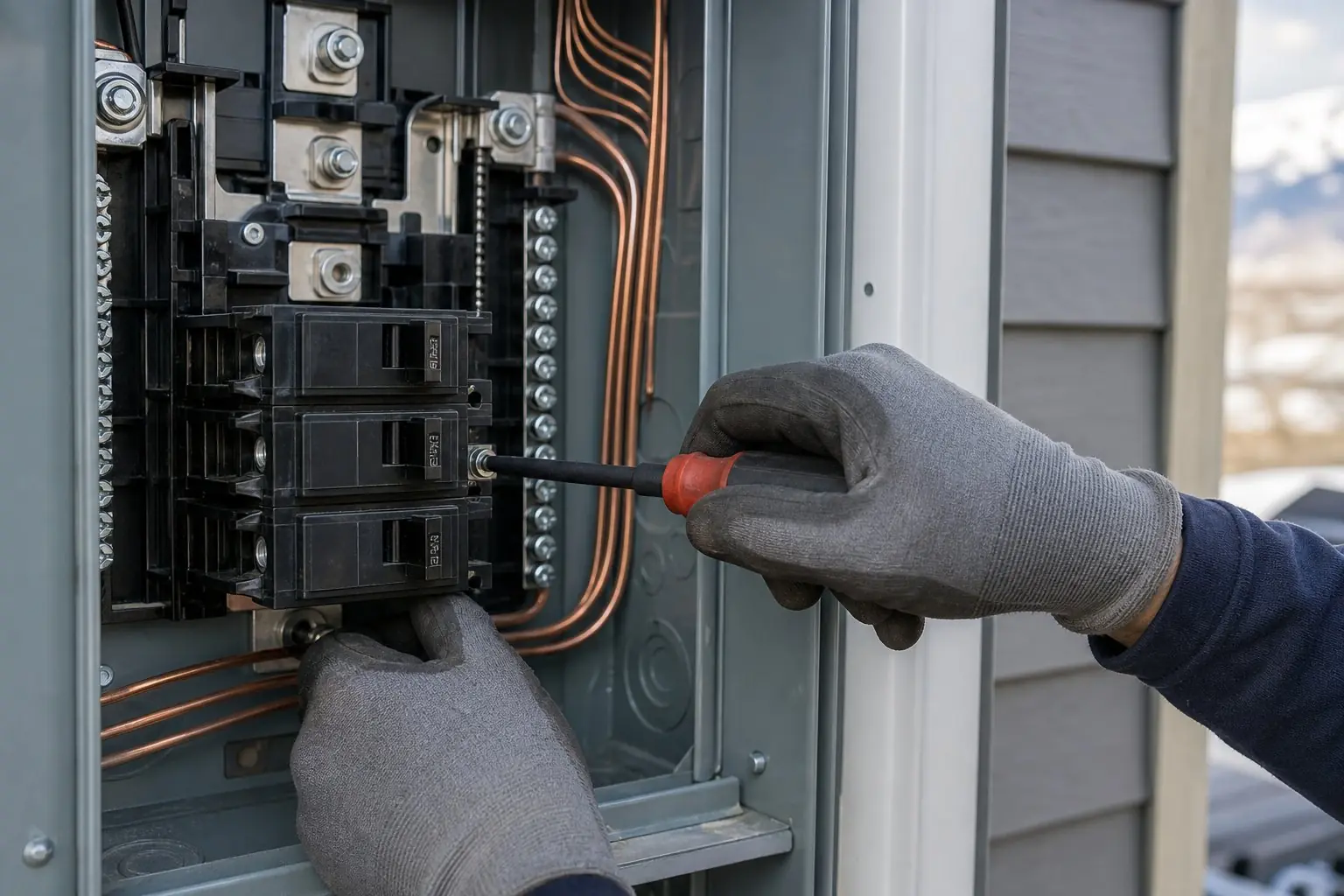
NEC 220.70 lets an energy management system's setpoint stand in for the charger's full rating in the calculation. Rivian's Wall Charger also has dip switch settings from 48 amps down, set to match a smaller breaker. Read more about panel upgrades and Level 2 charger installation. If the panel is tight, we check whether load management solves it before talking about an upgrade.
R1T home charging questions
Does my R1T have a J1772 or a NACS port?
Rivian's support pages split it by model year. 2022 to 2025 R1T trucks have a CCS1 port, which takes a J1772 plug for home charging. 2026 and later trucks have a NACS port. The Gen 2 label alone does not tell you, because 2025 Gen 2 trucks still have CCS1.
Is an 80 amp charger faster for an R1T?
No. Rivian says the onboard charger provides 11.5 kW to the R1T battery, which is what a 48 amp charger on a 240 volt circuit delivers. A charger set higher than 48 amps costs more and needs a bigger circuit without adding speed.
Can a Tesla Wall Connector charge a 2023 R1T?
The Universal Wall Connector can, through its docked J1772 adapter, at up to 48 amps. A NACS-only Gen 3 Wall Connector cannot, because Rivian's NACS DC adapter is for DC fast chargers only and Rivian warns against using it on an AC charger.
Is a NEMA 14-50 outlet enough for an R1T?
For many owners, yes. Rivian's Portable Charger runs at up to 32 amps (7.6 kW) from a NEMA 14-50 and Rivian quotes up to 16 miles of range per hour. A new receptacle installed for EV charging needs GFCI protection under NEC 625.54.
Know your R1T's model year? Add it to the quote request with a panel photo.
Get an R1T charger quote